Could You Be Missing Out on Thousands in Homebuying Assistance?

Saving for a down payment can feel like the hardest part of buying a home. And with affordability as tight as it’s been lately, it’s fair to wonder how anyone manages it right now. Here’s something you may not have seen coming.
Help You May Not Know You Qualify For
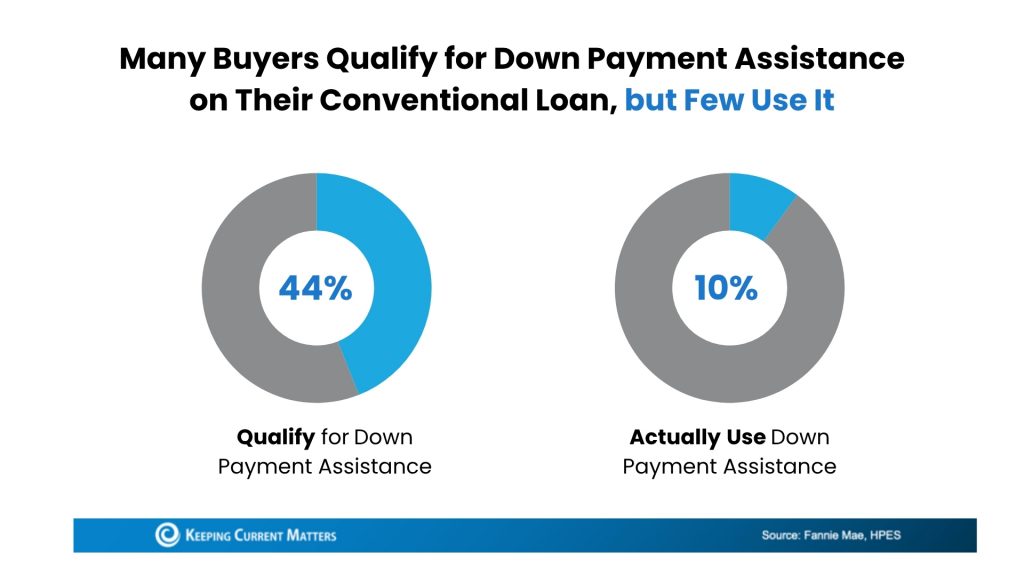
Down payment assistance is one of the most overlooked tools out there. Looking at the 10 largest U.S. metros, Urban Institute and Down Payment Resource found nearly 44% of recent buyers already qualified for a down payment program, but many of them closed on their loan without tapping the help (see chart):
The options are broader than you might assume, too. According to Down Payment Resource:
- There are more than 2,600 down payment assistance programs available.
- More than half (62%) are designed to help first-time buyers.
- 38% have no first-time buyer requirement, so you may qualify even if you’ve owned before.
- 62% are open to buyers earning $100,000 or more.
Why Aren’t More Homebuyers Using Down Payment Assistance
This may surprise you, but many home buyers never learn they qualify for down payment assistance. One of the biggest reasons is economics. Identifying and originating these loans often creates additional work and lower profitability for mortgage companies.
They frequently involve:
- Researching multiple assistance programs to determine borrower eligibility
- Verifying program-specific income, property, and eligibility requirements
- Collecting additional borrower documentation
- Completing a second underwriting or approval process through a housing finance agency or program administrator
- Preparing additional disclosures and compliance documentation
- Coordinating with state or local housing agencies
- Preparing additional closing documents
- Completing additional post-closing reporting and documentation requirements
All of this requires additional time from the loan officer, processor, underwriter, closer, and post-closing staff.
At the same time, many down payment assistance loans are less profitable for the mortgage company. Depending on the program, lenders may receive lower premiums when selling the loan on the secondary market, face limits on the fees they can charge, and incur higher operating costs because of the additional processing and compliance requirements. In some mortgage companies, loan officers may also receive reduced compensation on certain down payment assistance loans.
The result is simple: many lenders naturally focus on loan products that are easier to originate, require less staff time, and generate higher profitability.
That means thousands of homebuyers never learn they may qualify for grants or assistance that could save them thousands of dollars.
Why Your Employee Homeownership Program is Important
Advantage Home Plus isn’t a lender. Our role is to educate employees, answer their questions, and help them make informed homebuying decisions – including the use of down payment assistance programs when appropriate.
Our goal is to help employees successfully combat the housing affordability crisis by making informed decisions, understanding the options available, and potentially saving money with one of the largest financial decisions of their lives.
Bottom Line
If you’re considering buying a home in the next 12 months, it could save you thousands by talking with your Employee Homeownership Advisor first. With the guidance and added help from assistance programs, you may have more ways forward than you realized.


SupportSquad@AdvantageHomePlus.com | (800)511-2197
The information contained and the opinions expressed in this article are not intended to be construed as investment advice. Advantage Home Plus does not guarantee or warrant the accuracy or completeness of the information or opinions contained herein. Nothing herein should be construed as investment advice. You should always conduct your own research and due diligence and obtain professional advice before making any investment decision. * Real estate commission contributions are available as state laws allow.