
Thinking About Selling Your House As-Is? Read This First. 

If you’re thinking about selling your home this year, you may be weighing two options: 

  • Sell it as-is and skip repairs altogether 
  • Make a few updates so it shows better and potentially sells for more 

In 2026, that decision matters more than it used to. Here’s why. 

Inventory has been rising, and according to a Realtor.com forecast, the number of homes for sale could increase another 8.9% this year. With more choices available, buyers can afford to be selective again, which means details and condition are back in focus. 

A recent National Association of Realtors (NAR) study found that 65% of sellers completed minor repairs or improvements before selling, while only 35% sold their homes as-is (see chart). 
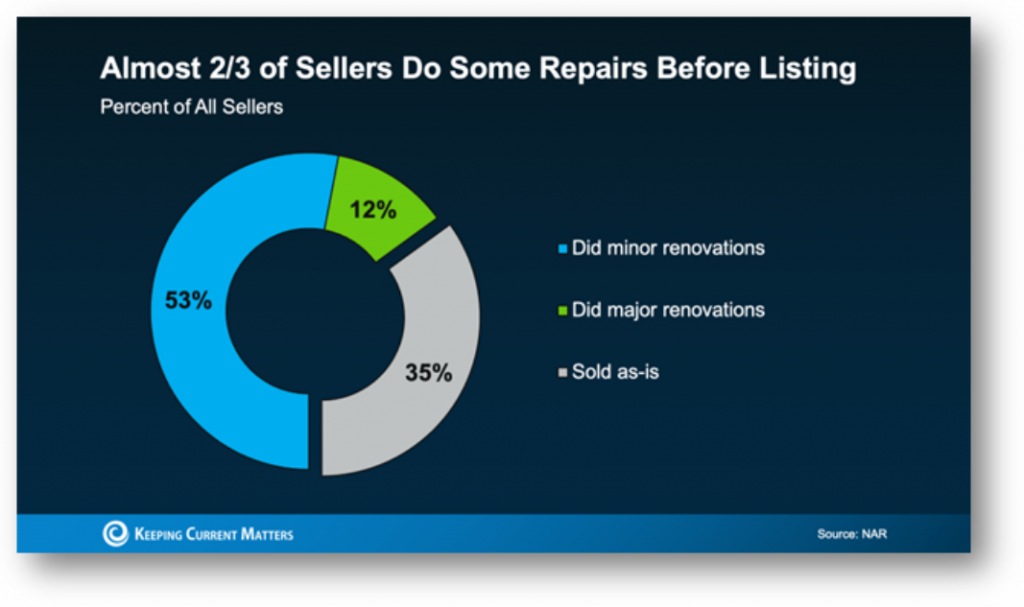
Selling as-is means you’re letting buyers know upfront that you won’t make repairs before listing or negotiate fixes after inspection. While that can simplify things on your end, it often limits your buyer pool. 

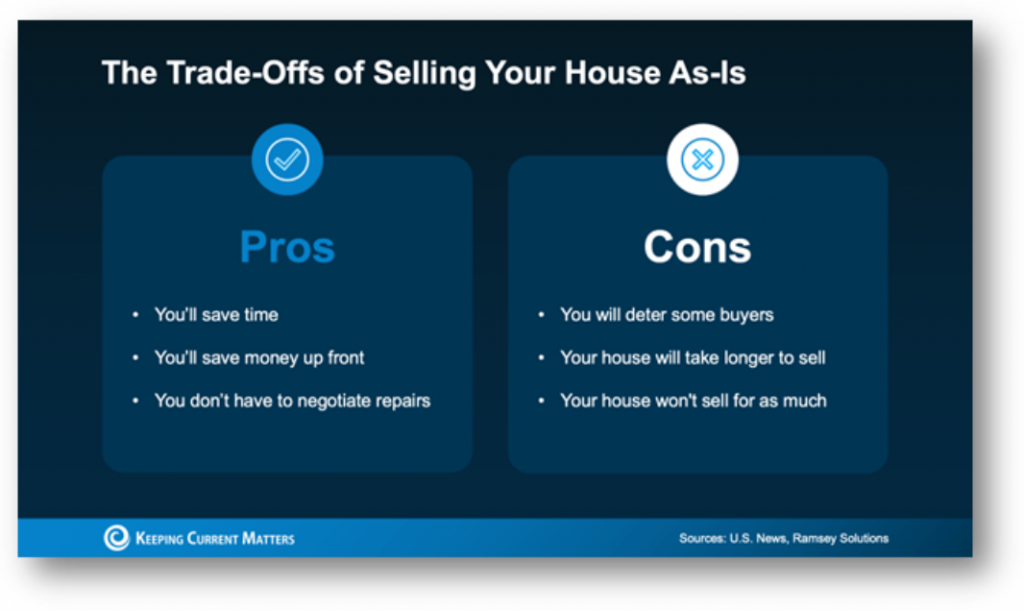
Move-in-ready homes tend to attract more interest and stronger offers. Homes that need work usually see fewer showings, fewer offers, and may sit on the market longer, often resulting in a lower final price. 

That doesn’t mean an as-is home won’t sell. It just means it may not sell for as much as it could. 

There’s no one-size-fits-all answer. The right choice depends on your home, your budget, and your local market. 

That’s where expert guidance helps. A knowledgeable professional can help you understand what repairs (if any) are worth making and what your home might sell for either way. 

  • If you sell as-is: The focus shifts to highlighting location, layout, and long-term potential. 
  • If you make updates: You can prioritize improvements that matter most to buyers, without overspending. 
The good news? With spring typically being the peak homebuying season, there’s still time to make thoughtful decisions without rushing. 

Selling as-is can make sense in certain situations – but in today’s market, it may come at a cost. You don’t have to make repairs before listing, but it’s worth fully understanding your options before you decide. 

As part of your Employee Homeownership Program through Advantage Home Plus, you don’t have to navigate that decision alone. Employees who are thinking about selling can access guidance to help them: 

  • Understand how selling as-is versus making updates could impact price and timing 
  • Think through repair priorities and whether improvements are likely to pay off 
  • Plan their next move, including buying another home or coordinating sale timing 
  • Get clarity before listing, so there are fewer surprises along the way 
  • A quick conversation can help you weigh the trade-offs and decide what makes the most sense for your situation – before you put your home on the market. 

A quick conversation can help you weigh the trade-offs and decide what makes the most sense for your situation – before you put your home on the market. 
Why Employees Plan to Refinance in 2026 And What It Means for You

Refinancing picked up in 2025, not because people were chasing the lowest possible rate, but because they wanted their mortgage to better fit their life today. Those same reasons are why many homeowners plan to refinance this year. 

Rising everyday expenses have left many households feeling tighter than expected, even with steady income. 

“We weren’t struggling, but we felt stretched,” shared Mark, who refinanced in late 2025. After reviewing his options through his Employee Homeownership Program, he lowered his monthly payment –  freeing up $350 dollars each month. 

For employees in similar situations, refinancing in 2026 may help improve their cash flow and reduce financial stress. 

Another common reason employees refinanced last year was to consolidate debt. 

Angela, a homeowner for seven years, refinanced in 2025 to roll credit card balances into her mortgage. “It wasn’t about spending more,” she said. “It was about stopping the interest from working against us.” 

Many employees planning to refinance in 2026 are exploring this same approach to replace multiple high-interest payments with one. 

Life changes and mortgages don’t always keep up. Employees refinanced in 2025 due to marriage, divorce, long-term planning, or a desire to move from an adjustable-rate loan to a fixed-rate loan. 

Jason, who refinanced last year, summed it up: “Our loan made sense when we bought the house. It didn’t make sense anymore.” 

Interest rates have come down from recent highs, but no one knows what’s next. Rather than trying to time the market, many homeowners are choosing to understand their options now. That starts with comparing today’s loan options, understanding costs, and seeing how long it would take to realize savings. 

Through your Employee Homeownership Program with Advantage Home Plus, you have access to tools designed to support informed decisions – without pressure. 

Employees considering refinancing in 2026 can access: 

  • A detailed refinance analysis 
  • Rate monitoring 
  • Discounted closing costs 
  • One-on-one guidance to review scenarios before deciding 

Many of the employees who refinanced using their Employee Homeownership Program in 2025 said the biggest benefit wasn’t just the savings – it was clarity. Knowing the decision they made was in their best interest and fit their overall all life-plan.  

Refinancing looks different for everyone, but the goal is the same: making your mortgage work better for your life. 

If refinancing is something you’re considering in 2026, have a conversation with one of your Benefits Advisors at your Employee Homeownership Program through Advantage Home Plus. Their goal is to guide and help you save money.  

Not Sure If You’re Ready to Buy a Home in 2026? Start With These 5 Questions

If you’re thinking about buying a home in the next year, you’re probably weighing a lot at once – your finances, today’s mortgage rates, home prices, and what the economy might do next. It can feel overwhelming, especially when everyone seems to have an opinion about whether now is the right time to buy.

Here’s the good news: while market conditions matter, they’re only part of the picture. Your personal readiness matters just as much — and that’s something you can actually control.

If buying is on your radar for 2026, these five questions can help you decide whether you’re truly ready – and what steps to take next. 

Buying a home is a long-term commitment, so having a steady income is an important starting point. That doesn’t mean your job has to be perfect – but knowing your paycheck is reliable can give you confidence as you plan. 

If you’re unsure how your income translates into a comfortable payment range, this is a good place to pause and get guidance before moving forward. 

Many buyers are surprised to learn there’s a difference between what a lender may approve and what actually fits their budget. 

Understanding affordability means looking at: 

  • Monthly payment comfort 
  • Existing debts 
  • Other financial goals you want to protect 

This is where one-on-one planning can be especially helpful – walking through numbers before you ever talk to a lender or start house hunting. 

Your credit score plays a major role in your interest rate and overall loan costs. Even small improvements can make a meaningful difference over time. If your credit isn’t quite where you want it to be yet, that doesn’t mean buying is off the table – it may simply mean taking a few smart steps now so you’re in a better position later this year. 

Buying a home involves more than a down payment. Closing costs, moving expenses, and future maintenance all factor into the decision. 

According to the National Association of Realtors (NAR), staying in a home for several years is often key to making those upfront costs worthwhile. If you’re planning to put down roots, buying may make sense – but it’s important to look at the full financial picture first. 

Before selecting a real estate agent or lender, it can be helpful to talk with someone whose role is simply to help you plan – not sell. 

Through your Employee Homeownership Program through Advantage Home Plus, you have access to: 

  • One-on-one coaching and planning conversations 
  • Credit review and improvement guidance 
  • Savings on closing costs when you’re ready to move forward 

Having this kind of support early can help you avoid surprises, make confident decisions, and feel prepared before taking the next step. 

Being ready to buy a home isn’t about timing the market perfectly – it’s about understanding your finances, your goals, and your options.  

If buying a home in 2026 is something you’re seriously considering, having a conversation with your Employee Homeownership Program through Advantage Home Plus can help you get clarity and build a plan – before choosing an agent, applying for a loan, or making an offer. 

SupportSquad@AdvantageHomePlus.com | (800) 511-2197 

Start 2026 by Saving for Your Down Payment

The new year brings a natural energy for setting goals, and for many, owning a home sits at the top of the list. While it’s tempting to focus solely on the final down payment number, true progress begins by building a strong financial foundation first. This approach not only makes saving more effective but also positions you as a strong, confident candidate when you’re ready to get a mortgage. Let’s build your 2026 plan from the ground up.

Before you set a savings target, you need to understand your starting point. This begins with a compassionate, factual look at your finances.

  • Review Your Credit: Obtain your free annual credit reports. Look for errors and understand your score. This number significantly influences your future mortgage rate.
  • Calculate Your Debt-to-Income (DTI) Ratio: Add up all your monthly debt payments (student loans, car payment, credit cards) and divide by your gross monthly income. Lenders use this to gauge your ability to take on a mortgage, so knowing it now is power.
  • Analyze Your Cash Flow: Track your income and expenses for a month. You can’t strategically redirect money until you know where it’s going.

With your snapshot complete, you can build a budget that supports your goal.

  • Identify Savings Levers: Based on your cash flow, where can you adjust? Can you reduce discretionary spending, pause a subscription, or renegotiate a service? Even small changes add up.
  • Automate Your Savings: Set up a recurring, automatic transfer to a dedicated savings account immediately after payday. This “pay yourself first” method is the most reliable way to build momentum.
  • Plan for Windfalls: Decide in advance that a portion of any tax refund, bonus, or gift will go directly to your down payment fund.

A strong foundation is also built on knowledge. A critical step is understanding what you’re actually saving for.

  • Explore Down Payment Assistance: Many local and national programs offer grants or favorable loans for first-time buyers. Researching these can lower your target savings amount.
  • Understand All Costs: Remember, the down payment is one part of the upfront cash needed. You must also budget for closing costs (typically 2-5% of the home price), moving expenses, and an emergency fund.

A major goal is easier with a framework and guidance. Sharing your plan with a trusted accountability partner can help, but professional insight can be transformative.

Developing a personalized, step-by-step plan that incorporates these four pillars is the key to transforming hope into a strategy. The educational resources and one-on-one coaching available through your employer’s financial wellness benefit, including guidance from a trusted partner like Advantage Home Plus, are designed to help you do exactly that. This support can provide the structure and clarity needed to build a foundation that supports not just a down payment, but lasting financial well-being.

5 Mistakes First-Time Homebuyers Make in Today’s Market

Avoid common pitfalls on your homebuying journey. Learn the top 5 mistakes first-time buyers make in today's market and how to navigate smarter with Advantage Home Plus.
Avoiding common financial and strategic mistakes can make your first home purchase a smoother, more successful experience.

The journey to buying your first home is thrilling, but today’s market adds layers of competition and complexity. In the rush of open houses and the pressure of bidding wars, it’s easy for even the most diligent buyers to stumble. By understanding common pitfalls, you can navigate the process with more confidence and avoid decisions you might regret later. Here are five critical mistakes to watch for.

The most common and costly error is falling in love with a home before you truly know what you can afford. Getting pre-qualified is a casual chat; getting pre-approved is a formal, verified commitment from a lender. A strong pre-approval letter defines your realistic budget, strengthens your offer in a seller’s eyes, and prevents the heartbreak of losing a home over financing. It’s your financial foundation, not a last-minute step.

You may know your credit score, but your DTI ratio is equally vital for mortgage approval. This number compares your total monthly debt payments to your gross income. Before you apply, pay down credit card balances and avoid taking on new debt (like a car loan). A lower DTI ratio not only helps you qualify but may also secure you a better interest rate.

In highly competitive markets, buyers sometimes waive inspection contingencies to make their offer more attractive. This is a tremendous risk. A professional home inspection can reveal hidden, expensive issues with the foundation, roof, electrical, or plumbing. While you may need to be flexible, waiving your right to inspect entirely can leave you responsible for unforeseen repairs costing tens of thousands of dollars.

The down payment is just the beginning. First-time buyers often forget to budget for closing costs, which typically range from 2% to 5% of the loan amount. You’ll also need cash for an earnest money deposit, moving expenses, immediate repairs, and furnishings. Failing to plan for these can drain your savings and create financial stress immediately after closing.

The search for a first home is emotional. This can lead to overbidding beyond your budget, overlooking major flaws because you love the kitchen, or feeling pressured to compromise on non-negotiables. Establish your maximum price and core needs before you start shopping. A trusted advisor can provide the objective perspective needed to make a sound financial decision, not just an emotional one.

Avoiding these mistakes comes down to preparation, education, and having a clear, supportive strategy. The path to homeownership is a major financial undertaking, and you don’t have to navigate it alone.

The educational resources and one-on-one guidance available through your employer’s financial wellness benefit, with partners like Advantage Home Plus, are designed to help you build this exact foundation. From understanding your true budget to navigating offer negotiations, this support can help you transform from an anxious first-time buyer into a confident, prepared homeowner.