Waiting for Lower Mortgage Rates? Here Is What the Data Shows

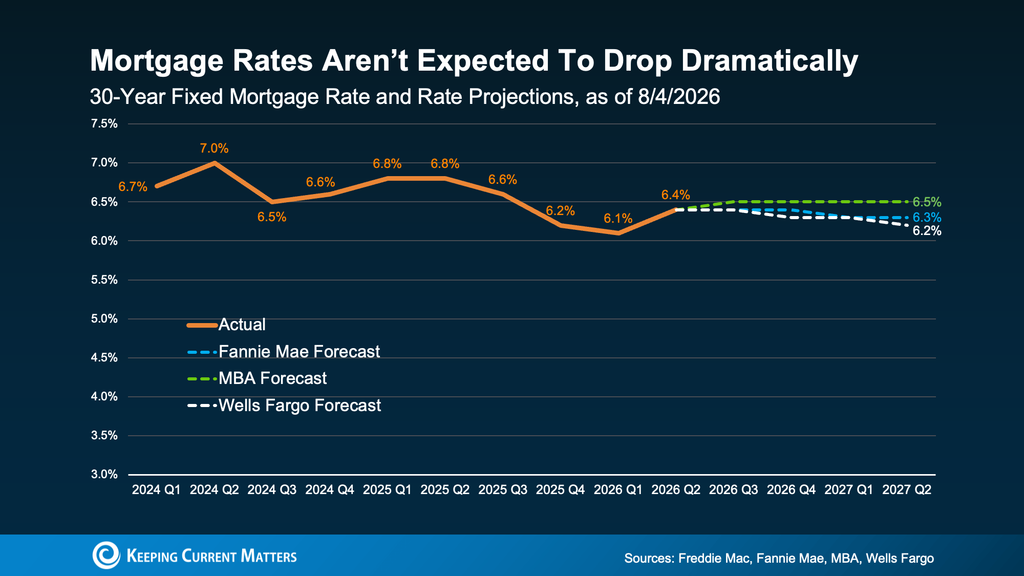
If you are putting your home purchase plans on hold in anticipation of lower mortgage rates; you are not alone. Survey data shows that many prospective buyers believe rates will drop significantly in the near future. However, current financial forecasts from major institutions, including Fannie Mae and the Mortgage Bankers Association, suggest mortgage rates are likely to remain relatively steady in the mid-6% range for the foreseeable future


If you are putting your home purchase plans on hold in anticipation of lower mortgage rates; you are not alone. Survey data shows that many prospective buyers believe rates will drop significantly in the near future. However, current financial forecasts from major institutions, including Fannie Mae and the Mortgage Bankers Association, suggest mortgage rates are likely to remain relatively steady in the mid-6% range for the foreseeable future.
Understanding why rates are expected to stay at these levels helps put the broader market into perspective:

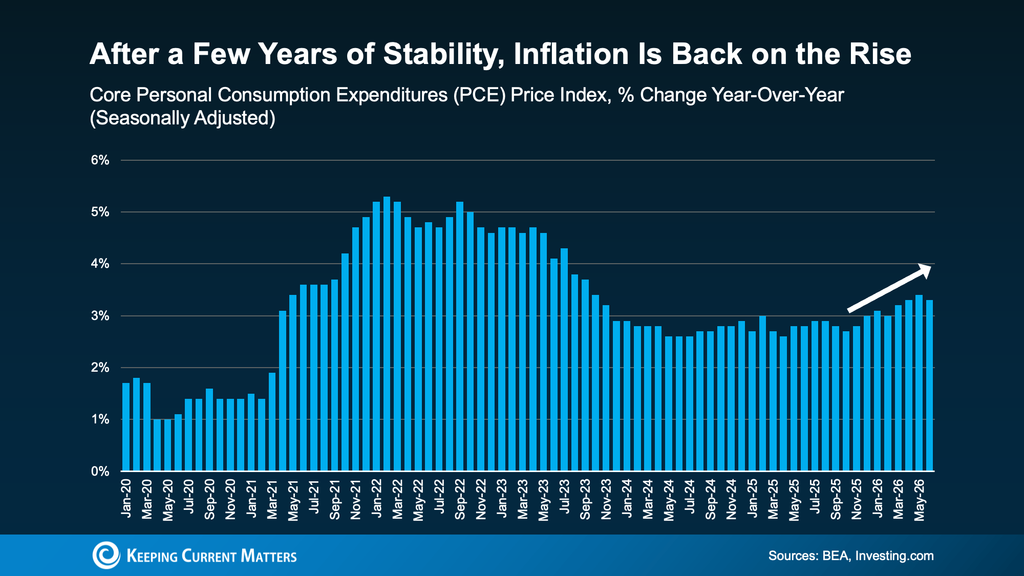
  • Persistent Inflation Dynamics: Inflation remains a primary driver of mortgage rates. Elevated inflation levels continue to exert upward pressure on borrowing costs, preventing dramatic drops in interest rates.
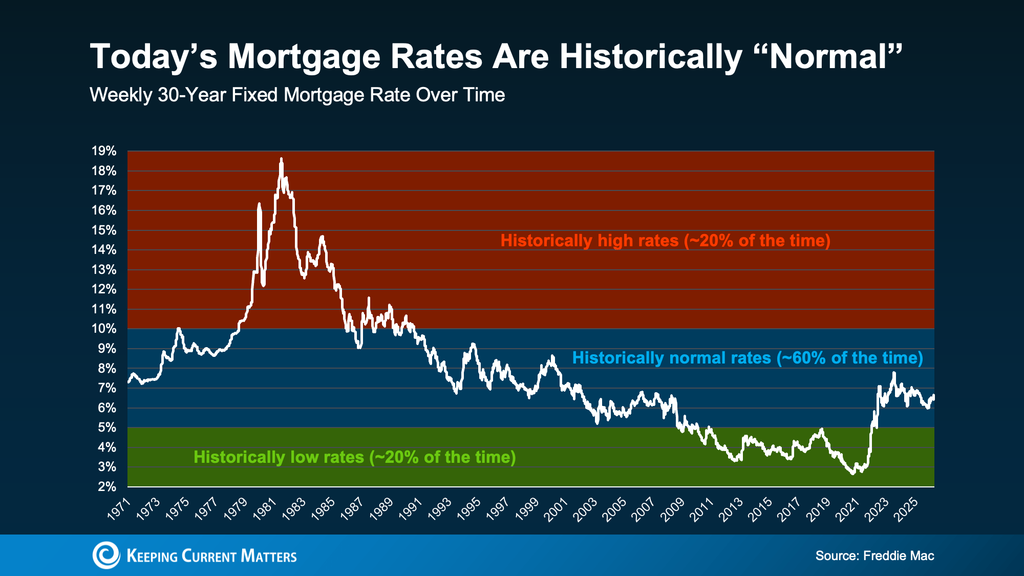
  • Historical Context: While current rates may feel elevated compared to the historic lows of recent years, historically, mortgage rates have averaged between 5% and 10%. Today’s rates reflect a return to long-term historical norms rather than an unprecedented peak.
Waiting for a dramatic shift in market rates may mean putting your financial and personal goals on hold longer than expected. Fortunately, waiting is not the only path to achieving manageable homeownership costs. Depending on your financial profile, several practical financing options can help improve affordability today:

  • Builder Incentives: On newly constructed homes, builders frequently offer incentives such as price adjustments or temporary rate buydowns to assist buyers.
  • Mortgage Rate Buydowns: Buyers can negotiate options to pay upfront fees that reduce interest rates for the initial years of the loan, resulting in lower monthly payments.
  • Alternative Loan Structures: Exploring options like adjustable-rate mortgages (ARMs) or assumable loans may provide lower initial interest rates depending on how long you plan to stay in the home.

Trying to time the housing market or waiting for interest rates to fall can leave you stuck in limbo while home prices and personal timelines continue to move. Evaluating options like rate buydowns, builder incentives, or alternative loan structures requires careful calculations to ensure they fit your monthly budget and long-term financial picture. Navigating these choices without expert analysis can make an already complex market overwhelming and increase the risk of missing out on viable opportunities.

That is where your workplace support benefits provide real, tangible value. Through your program, you do not have to figure out these complex financial trade-offs on your own. Connecting with a dedicated advisor gives you expert guidance to evaluate your complete financial readiness, compare financing models, and build a strategy tailored specifically to your household goals.

Understanding how today’s mortgage market aligns with your personal timeline is an essential step toward achieving your homeownership goals. Schedule your free


Employee Homeonwrship Program

SupportSquad@AdvantageHomePlus.com | (800)511-2197 

Unlocking Your Home Equity: The Strategic Power of a 20% Down Payment

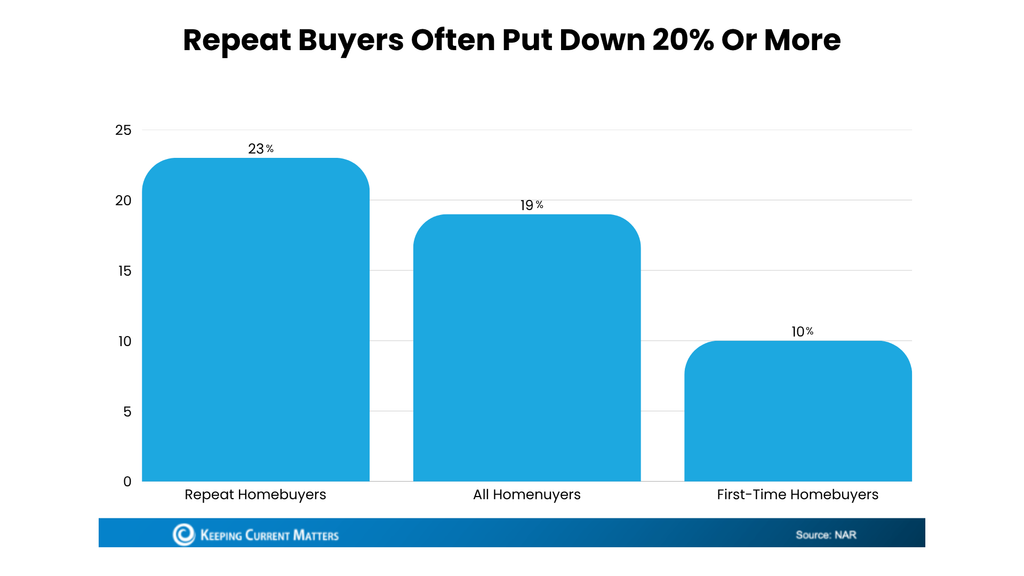
If you are planning to purchase your next home, you have likely encountered the traditional guideline recommending a 20% down payment. While many loan programs allow qualified buyers to put down significantly less, a growing number of repeat homebuyers are choosing to put down 20% or more.

If you are planning to purchase your next home, you have likely encountered the traditional guideline recommending a 20% down payment. While many loan programs allow qualified buyers to put down significantly less, a growing number of repeat homebuyers are choosing to put down 20% or more.


According to data from the National Association of Realtors, the typical repeat homebuyer puts down roughly 23%, more than double the standard down payment of a first-time buyer.

The primary driver behind this shift is existing home equity. Over time, as you pay down your mortgage balance and home values appreciate, the difference between what you owe and what your home is worth builds up. When selling a current home, that accumulated equity can be rolled directly into your next purchase.

If your accumulated equity makes a larger down payment possible, doing so provides several key financial advantages:

  • Lower Monthly Payments: Borrowing less money directly reduces your total loan balance. In today’s interest rate environment, minimizing the amount financed keeps your ongoing monthly housing commitment more manageable.
  • Reduced Long-Term Interest Costs: Interest is calculated on the remaining loan principal. Lowering your starting balance from 95% to 80% of the home’s value substantially reduces total interest paid over the life of the loan.
  • Elimination of Private Mortgage Insurance (PMI): On conventional loans, down payments below 20% typically require monthly PMI fees to protect the lender. Reaching the 20% threshold waives this requirement, keeping more money in your monthly budget.
  • Stronger Financial Positioning: A higher down payment signals financial stability during the purchase process, providing greater flexibility and leverage when negotiating purchase terms.

While a 20% down payment is not mandatory for homeownership, leveraging your accumulated equity to reach that target can significantly lower ongoing housing expenses and strengthen your overall financial health.

Selling a current home while preparing to buy another involves complex moving parts, from calculating your true net equity after closing costs to timing your sale, pricing accurately in a competitive market, and structuring your new mortgage. Estimating these numbers on your own can leave significant money on the table or lead to unexpected out-of-pocket expenses.

Navigating this transition efficiently requires personalized financial analysis and expert market strategy. Through your employee benefits program, you don’t have to figure it out alone. Connecting with a dedicated advisor gives you expert guidance to evaluate your home’s current market value, accurately calculate your available equity, and build a seamless plan to maximize your buying power.

Understanding how your current home equity aligns with your long-term goals is an important first step in planning your next move. Schedule your free consultation today to explore your options and run the numbers for your household.

Employee Homeonwrship Program

SupportSquad@AdvantageHomePlus.com | (800)511-2197 

Exploring Condos and Townhomes: An Accessible Path to Homeownership


Finding a home that fits your budget can feel challenging in today’s housing market. As median home prices remain elevated, many aspiring buyers wonder if homeownership is within reach. However, expanding your search beyond traditional single-family homes can unlock accessible pathways to building long-term wealth and stability.

For many individuals, condos and townhomes offer an ideal entry point into real estate without overextending personal finances. Understanding how these alternatives fit into your broader financial plan can help you evaluate whether they align with your goals.

If your home search has focused exclusively on single-family homes, you may be overlooking significant opportunities. Recent national real estate data highlights two key advantages currently favoring buyers in the condo and townhome space:

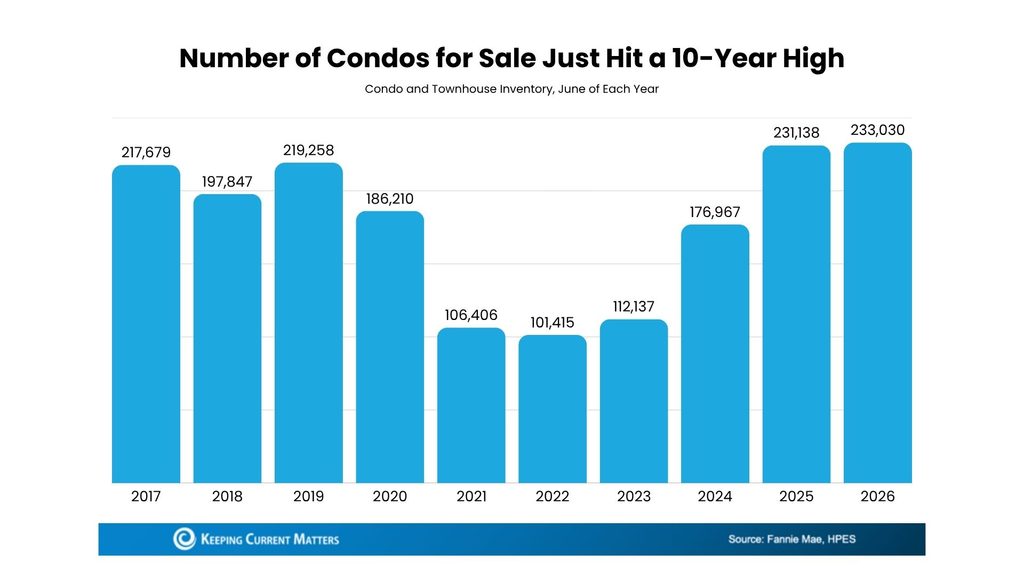
  • Increased Inventory: In mid-2026, inventory for condos and townhomes reached its highest level in over a decade, with more than 230,000 units available nationwide, more than double the supply seen in 2022. Higher inventory generally means less market competition and more breathing room to evaluate your options carefully.
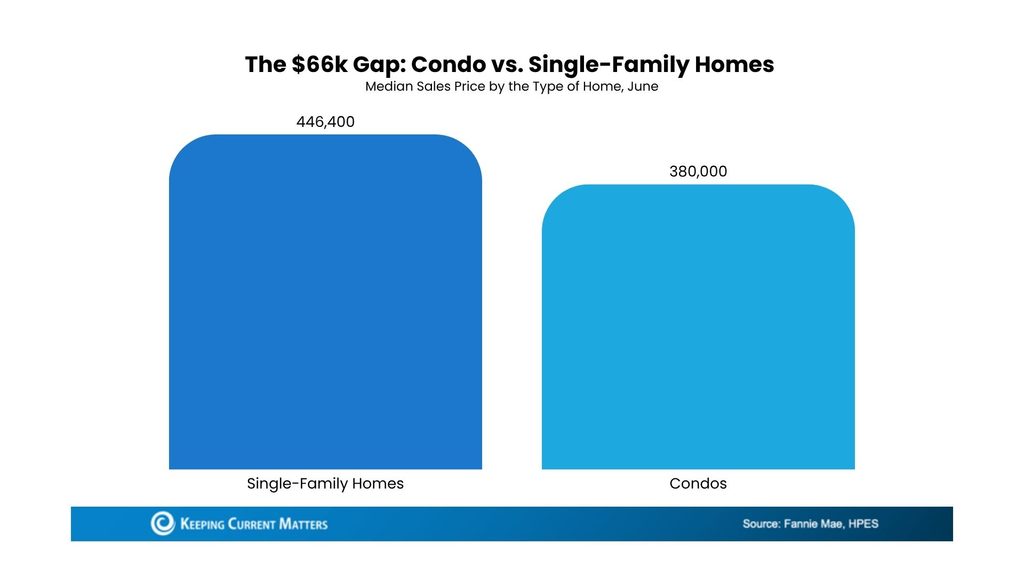
  • Lower Entry Prices: According to the National Association of Realtors (NAR), the median price for a condo was $380,000 in mid-2026, compared to $446,400 for a single-family home, a difference of over $66,000. For first-time buyers, this lower price point can significantly reduce required down payments and monthly mortgage commitments.

Choosing the right property involves balancing financial considerations with everyday living preferences:

  • Townhomes: You typically own the structure and the land beneath it. Townhomes usually offer multi-level living and private outdoor spaces while sharing one or two walls with neighbors. Maintenance obligations are higher than with a condo, but you maintain greater control over property decisions.
  • Condominiums: You own the interior space of your individual unit, while shared structures and common amenities are managed collectively. Condos significantly reduce personal exterior maintenance duties, though they require monthly Homeowners Association (HOA) fees to cover upkeep and shared reserves.

Finding the right path to homeownership isn’t about fitting into a one-size-fits-all model, it’s about finding a strategy that aligns with your personal budget and long-term financial stability. Whether you are exploring condos and town homes to maximize your purchasing power or evaluating how to leverage existing equity, having clear information is key to making confident decisions.

Through your employee support resources, you have access to personalized guidance to help you navigate options, run the numbers, and build a plan tailored to your household goals.

Ready to explore how homeownership fits into your personal financial timeline? Schedule your free consultation today.

Employee Homeonwrship Program

SupportSquad@AdvantageHomePlus.com | (800)511-2197 

From Listed to Sold: Strategic Steps to Relaunch Your Property

Having a home sit on the market without selling can be a frustrating experience. It disrupts moving timelines, impacts long-term financial plans, and often leaves homeowners second-guessing their next steps. However, an unsold property rarely means your homeownership goals are out of reach, it simply signals that a shift in strategy is needed.

Having a home sit on the market without selling can be a frustrating experience. It disrupts moving timelines, impacts long-term financial plans, and often leaves homeowners second-guessing their next steps. However, an unsold property rarely means your homeownership goals are out of reach, it simply signals that a shift in strategy is needed.


When a listing expires or is withdrawn, successful sellers turn the situation around by evaluating what went wrong rather than waiting for market conditions to change on their own. Bringing a fresh set of eyes to your selling plan can provide the objective insights needed to align your property with current buyer expectations.

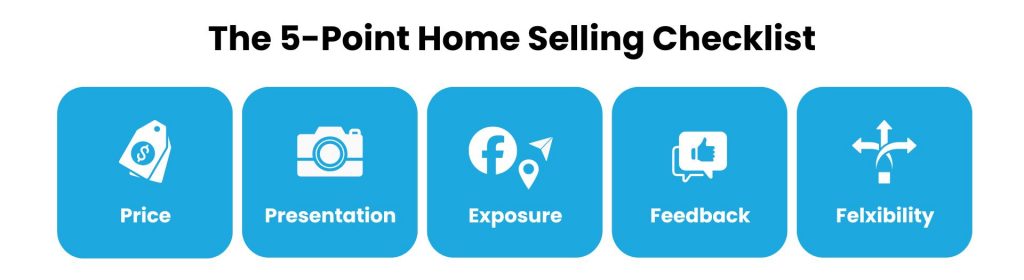
  • Aligning Price with Market Reality: In today’s economic climate, buyers are cautious about borrowing costs and monthly expenses. Properties priced even slightly above current market value risk being overlooked. Analyzing recent local sales ensures your asking price reflects true market demand.
  • Optimizing First Impressions: Prospective buyers evaluate homes online within seconds. Dark photography, minor unaddressed repairs, clutter, or outdated staging can deter interest before a walkthrough even happens. Simple updates to curb appeal and presentation can dramatically improve engagement.
  • Expanding Digital Exposure: As property inventory shifts, standard listing uploads may not reach enough qualified buyers. Broadening digital marketing channels and visual content helps your property stand out.
  • Leveraging Showing Feedback: If a home receives online views or physical tours but no offers, buyers are providing indirect feedback. Systematically reviewing buyer comments helps pinpoint specific barriers to sale.
  • Maintaining Negotiation Flexibility: Today’s transaction environment often involves buyer requests for closing cost assistance or repair credits. Establishing clear financial priorities beforehand allows for constructive negotiations without stalling progress.

Selling a current home to fund the next move involves navigating a complex real estate climate where timing, pricing strategy, and local market shifts matter more than ever. Leveraging accumulated equity is a powerful strategy, but successfully transitioning from selling to buying requires careful planning and expert coordination.

That’s where your homeownership benefits program delivers real value. You have access to dedicated advisors and resources who can help you evaluate your property’s value, map out long-term financial scenarios, and streamline the selling and buying process, saving you time, stress, and money.

Navigating today’s market is much easier with a clear plan and expert support in your corner. Schedule your free consultation today to explore your home equity options and get personalized guidance for your next step.

Employee Homeonwrship Program

SupportSquad@AdvantageHomePlus.com | (800)511-2197 

Should You Pay for Your Buyer’s Closing Costs? What Sellers Need To Know.

Should You Pay for Your Buyer’s Closing Costs? What Sellers Need To Know.

A few years ago, sellers could get away with saying “no” to just about everything.

  • No repairs.
  • No concessions.
  • No negotiation.

If buyers wanted the house, they pretty much had to take it on the seller’s terms. But now that inventory’s grown, negotiations are becoming a normal part of the process again.

That’s why one of the most important things sellers need to understand right now is this:

The goal isn’t to “win” every negotiation.

Sometimes, it’s worth meeting buyers where they are to get a deal done, fast. One example? Helping with a buyer’s closing costs.

Let’s break that down, so you know what to expect if it comes up in your sale.

Closing costs are the extra expenses buyers pay on top of their down payment when they purchase a home. Freddie Mac gives some examples:

  • Loan origination fees
  • Appraisal and inspection costs
  • Title and attorney fees
  • Survey fees and more

Typically, buyer closing costs range from about 2% to 5% of the home’s purchase price. So, on the typical $400,000 home, that could mean anywhere from $8,000 to $20,000 out of pocket.

And in today’s affordability-challenged market, that upfront cash can be a major hurdle for some buyers – even if they can comfortably afford the monthly mortgage payment itself. 

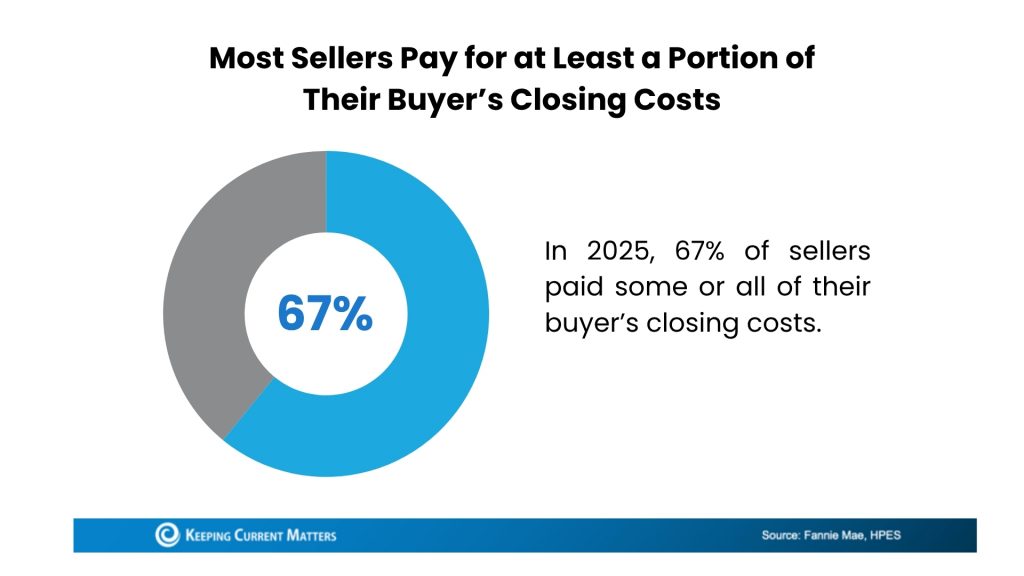
According to the latest data from Zillow67% of sellers reported paying some or all the buyer’s closing costs in 2025 (see chart below):

Now, that doesn’t mean every seller is doing it. And it doesn’t mean every seller should. But it does show how common concessions have become as the market has shifted. And that’s important for you to know.

This is where many sellers get stuck. They hear “help with closing costs” and immediately think: “Why should I pay for their expenses?”

But that’s not always the right way to look at it. You’ve got to consider who has the leverage in today’s market.

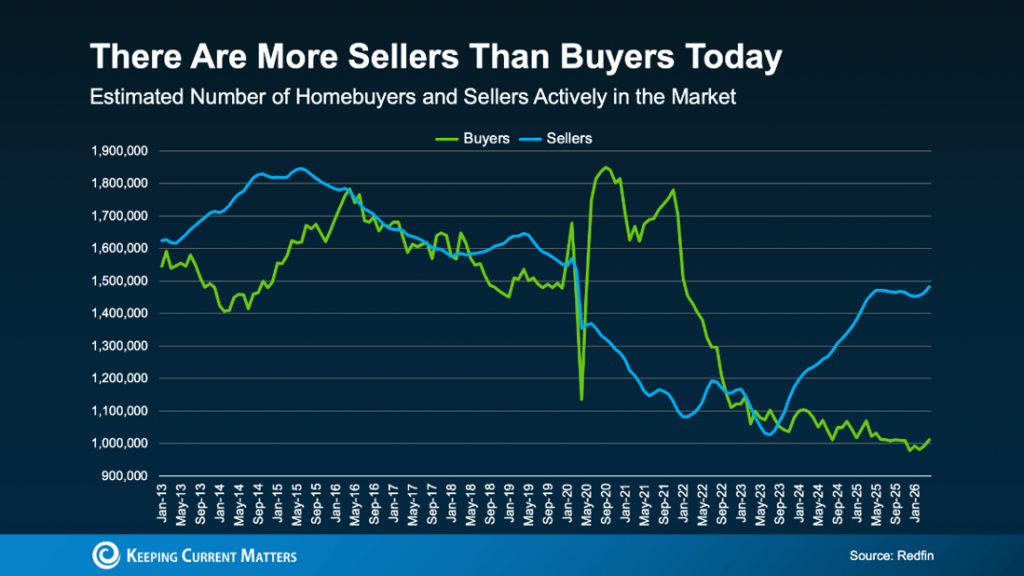
Redfin data shows there are more sellers than buyers active today. And that shifts the market dynamics (see graph below):

That doesn’t mean every market favors buyers. Far from it. In some areas, homes are still selling quickly and sellers have plenty of leverage. But in others, buyers have more room to negotiate than they’ve had in years.

That’s why local market conditions matter so much when you make your decision.

For example, helping with closing costs may be worth considering if:

  • There are a lot of homes for sale in your area
  • Your house has been sitting on the market for longer than expected
  • You’ve had showings, but no offers
  • You’re motivated to move quickly
  • Or you’re trying to keep a deal together during negotiations

After all, if it’s the thing that helps bring a serious buyer across the finish line, it could be well worth it.

Just remember, being flexible doesn’t mean saying “yes” to every request.  It means understanding which compromises actually help you accomplish your goals. Because there are always alternatives.

Redfin suggests considering other concessions if you’re not interested in helping with closing costs, like:

  • A home warranty
  • Repair credits
  • Flexible closing dates, or
  • Leave behind appliances or furniture

The right answer depends on what buyers in your market are asking for and what matters most to you. That’s exactly why working with your Employee Homeownership Program Advisor is so important.

Are you ready to explore your options, build a customized financial plan, or get answers to your homeownership questions? Schedule your free consultation today.

Employee Homeonwrship Program

SupportSquad@AdvantageHomePlus.com | (800)511-2197 

Rentar vs. Comprar: Desglosando los gastos invisibles para una planeación financiera inteligente

La planeación estratégica de vivienda no se trata de buscar el precio base más bajo; se trata de mejorar tu situación financiera general y crear un respiro en tu presupuesto mensual.

Ya que estamos llegando a la mitad del año, muchos empleados descubren que sus prioridades financieras han cambiado desde enero. Aunque la conversación a nivel nacional suele centrarse en si conviene más rentar o comprar basándose puramente en los precios del mercado, hay una pregunta mucho más vital para tu bienestar personal: “¿Mi presupuesto de vivienda actual está tomando en cuenta el costo total de mi situación de vida?”

En lugar de esperar el momento “perfecto” para mudarte o comprar, junio nos ofrece una oportunidad única para evaluar esos gastos ocultos en tus costos de vivienda. Así podrás optimizar tu presupuesto y darle un respiro inmediato a tu flujo de efectivo mensual.

Para muchos hogares, el principal reto financiero no es solo el pago básico mensual de la renta o la hipoteca; es la acumulación de otras obligaciones mensuales que son menos visibles. Analizar con honestidad todos tus gastos de vivienda actuales puede ser una jugada muy poderosa, ya que te permite identificar fugas de dinero ocultas y reducir lo que realmente sale de tu bolsillo mes con mes.

Incluso si las opciones actuales del mercado parecen complejas, evaluar todo el panorama de los costos de vivienda puede ayudarte a alcanzar metas muy específicas:

  • Identificar los gastos extra al rentar: Descubrir esos costos del departamento que solemos pasar por alto, como el seguro obligatorio para inquilinos, cuotas de mantenimiento o amenidades, estacionamiento o el aumento en los servicios básicos.
  • Planear el mantenimiento del hogar: Tomar en cuenta los impuestos a la propiedad (predial), ajustes de seguros y ese fondo esencial para el mantenimiento de rutina que vas a necesitar cuando te conviertas en tu propio casero.
  • Controlar tus niveles de endeudamiento: Ver cómo estos gastos de vivienda secundarios impactan en tu salud crediticia y en tu relación deuda-ingreso (qué tanto de lo que ganas se va a pagar deudas).
  • Reorganizarte para ganar flexibilidad: Ajustar tus ahorros a corto plazo y tus hábitos de consumo para alinearlos mejor con tus planes de ahorro o retiro a largo plazo.

La estrategia de “esperar a ver qué pasa” a menudo solo sirve para cargar con un estrés financiero innecesario durante más tiempo de lo debido. Al cambiar tu enfoque de “atinarle al momento perfecto del mercado” a “crear una estrategia financiera”, puedes empezar a avanzar hoy mismo y trazar una ruta clara para tu futura situación de vivienda.

Para ayudarte a descifrar si los números juegan a tu favor, tu empresa te ofrece un beneficio de vivienda enfocado en darte educación clara y objetiva. Este recurso te permite comparar diferentes escenarios de financiamiento, quitarles el misterio a los gastos invisibles e identificar en qué áreas puedes ahorrar más dinero según tu situación particular.

Tu Programa de Beneficios de Vivienda para Empleados está aquí para ayudarte a planear, evaluar tus opciones y ahorrar dinero en el camino.

Reserva una Sesión de Estrategia para obtener un plan claro y personalizado, diseñado exclusivamente para ti.

Employee Homeonwrship Program

SupportSquad@AdvantageHomePlus.com | (800)511-2197 

Renting vs. Buying: Unpacking the Invisible Expenses for Smart Financial Planning


As we reach the midpoint of the year, many employees find that their financial priorities have shifted since January. While the national conversation often fixates on whether to rent or buy based purely on market prices, a more vital question for your personal wellness is: “Is my current housing budget accounting for the full cost of my living situation?”

Instead of waiting for a “perfect” moment to relocate or purchase, June offers a unique opportunity to evaluate the hidden line items in your housing costs to streamline your budget and provide immediate relief to your monthly cash flow.

For many households, the primary financial challenge isn’t just the base monthly rent or mortgage payment; it’s the accumulation of other, less visible monthly obligations. Taking an honest look at your complete housing expenses today can be a powerful move if it allows you to identify hidden leaks and lower your total monthly out-of-pocket expenses.

Even if current market options seem complex, evaluating the full spectrum of housing costs can help you achieve specific goals:

  • Repositioning for Flexibility: Adjusting your short-term savings and spending habits to better align with your long-term retirement or savings plans.
  • Identifying Renter Overhead: Uncovering overlooked apartment costs like mandatory renters insurance, amenity fees, parking, or escalating utility setups.
  • Planning for Home Upkeep: Factoring in property taxes, insurance adjustments, and the critical routine maintenance funds required when you become your own landlord.
  • Managing Debt Ratios: Seeing how these auxiliary housing expenses interact with your credit health and total debt-to-income ratio.

The “wait and see” approach often results in carrying unnecessary financial stress longer than necessary. By shifting your focus from “market timing” to “financial strategy,” you can make progress now and establish a clear financial roadmap for your future living situation.
To help you determine if the math works in your favor, your company provides a homeownership benefit focused on clear, objective education. This resource allows you to compare different financing scenarios, demystify invisible expenses, and identify where you can save the most money based on your unique situation.

Your Employee Homeownership Program is here to help you plan, navigate your options, and save money along the way.

Book a Strategy Session to get a clear, personalized path forward – based on your unique situation.

Employee Homeonwrship Program

SupportSquad@AdvantageHomePlus.com | (800)511-2197 

The “Stay-In-Place” Strategy: Transforming Your Current Home to Fit Your Future

When a household starts outgrowing its layout or notices the decor aging, looking up local property listings feels like the most logical next step.

When a household starts outgrowing its layout or notices the decor aging, looking up local property listings feels like the most logical next step. However, jumping headfirst into a competitive purchasing environment brings a massive wave of logistical friction and lifestyle disruption.
Before committing to a frantic search for a new address, smart financial planning requires exploring what is already right under your feet. July provides an ideal seasonal pause to audit your current environment and uncover hidden spatial potential. Reimagining the square footage you already possess can safeguard your savings while offering profound relief from the claustrophobia of an unoptimized layout.

Deciding to change neighborhoods involves a steep financial toll that goes far beyond the price tag of a new home. Sellers and buyers face thousands of dollars in hidden transactional drains, from real estate commissions and legal fees to moving companies and storage containers. Taking a cold, hard look at your current real estate assets right now shields you from these sunk costs, allowing you to reallocate those exact funds directly into value-boosting property enhancements instead.

“True housing satisfaction rarely requires a brand-new zip code; it stems from intentionally engineering your existing home to generate breathing room for both your family and your wallet.”

Even if current market options seem complex, evaluating the full spectrum of housing costs can help you achieve specific goals:

  • Repositioning for Flexibility: Planning small, phased updates carefully to ensure your home adjustments better align with your long-term retirement or savings plans.
  • Avoiding Moving Friction: Eliminating the thousands of dollars spent on moving logistics and real estate fees, redirecting that capital directly into your home’s value.
  • Maximizing Existing Footprints: Repurposing underutilized areas—like attics, basements, or garages—into functional home offices, gyms, or bedrooms.
  • Locking in Community Value: Preserving your established neighborhood ties, school districts, and commute times while still achieving a “new home” feel.

Falling into the trap of “analysis paralysis” often leads to overcomplicating your finances and stalling your progress altogether. By pivoting your mindset from trying to solve every financial puzzle at once to simply mastering one small habit at a time, you can cut through the noise and build immediate, sustainable momentum.

To help you determine if the math works in your favor, your company provides a homeownership benefit focused on clear, objective education. This resource allows you to compare different financing scenarios, evaluate home equity options for upgrades, and identify where you can save the most money based on your unique situation.

Your Employee Homeownership Program is here to help you plan, navigate your options, and save money along the way.

Book a Strategy Session to get a clear, personalized path forward – based on your unique situation.

Employee Homeonwrship Program

SupportSquad@AdvantageHomePlus.com | (800)511-2197 

Smart Summer Upgrades: How to Build Home Equity with Easy Cosmetic Fixes


Summer is the season of home updates. Whether you are thinking about selling your home in the near future or simply want to build long-term financial stability, you don’t need a massive budget or a full-scale renovation team to make a significant impact.

Many times, the smallest, most manageable cosmetic updates are the ones that yield the highest return on investment. If you are looking for a few productive weekend projects this July, here are the smart, budget-friendly updates that real estate professionals love to see.

First impressions matter immensely. Simple landscaping updates can instantly boost your home’s perceived value. Trim overgrown bushes, edge the lawn, and add a fresh layer of dark mulch to your flower beds. A clean front yard signals that the entire property has been well cared for.

Your front door is the focal point of your home’s exterior. Give it a fresh coat of paint in a classic, appealing color—like deep navy, charcoal, or clean black—and swap out old, tarnished hardware for modern locks. This is one of the lowest-cost projects available, yet it consistently ranks high for visual appeal.

Inside the home, nothing transforms a space faster or more affordable than painting. Focus on high-traffic areas like the entryway or living room. Stick to warm neutrals or off-whites that make spaces feel larger, brighter, and more open.

Old, yellowing light fixtures or outdated cabinet hardware can make a home feel stuck in a different decade. Swapping out old light fixtures for modern LED alternatives and replacing kitchen cabinet knobs with matte black or brushed nickel finishes can make your space feel contemporary without the price tag of a full remodel.

Building equity and maintaining your home is a continuous process. You don’t have to tackle everything at once; progress, not perfection, is what truly makes the difference. If you ever want to know how these updates factor into your home’s overall market value, or if you’re curious about how to leverage your existing equity for your next financial goal, your company-sponsored benefits are always here to guide you.

Your Employee Homeownership Program is here to help you plan, navigate your options, and save money along the way.

Schedule your free consultation today.

Employee Homeonwrship Program

SupportSquad@AdvantageHomePlus.com | (800)511-2197 

3 Simple Habits to Boost Your Mortgage Readiness This Summer

3 Simple Habits to Boost Your Mortgage Readiness This Summer
June is the perfect time to pull back the curtain on these numbers.

When it comes to financial wellness, few topics carry as much weight, or as much mystery, as the credit score. For many employees dreaming of homeownership, the credit score is often viewed as an intimidating gatekeeper that can feel impossible to satisfy. However, June is the perfect time to pull back the curtain on these numbers.
Understanding how credit works is not just about getting a loan; it is about taking control of your financial reputation and opening doors to long-term wealth that many assume are closed.

A lot of people assume they are not ready to buy because their credit isn’t “perfect,” but homeownership is often closer than most realize. The biggest issue isn’t always the score itself; it’s the lack of a clear plan to manage it.

“Your credit score is a reflection of your financial habits, and like any habit, it can be improved with the right information and consistent effort.”

You don’t need to be a financial expert to start making meaningful progress this month. Focus on these core areas to strengthen your position:

  • Understand Your Utilization: Learning how the balance on your credit cards relative to your limits affects your score.
  • Identify and Dispute Errors: Knowing how to check your credit report for inaccuracies that could be unfairly dragging your score down.
  • Establish Consistency: Understanding why a history of on-time payments is the most significant factor in long-term credit health.

The value of a higher credit score goes far beyond a simple “approval”. In the context of a mortgage, even a slight improvement in your score can lead to lower interest rates, which translates into thousands of dollars saved over the life of your loan.

To help you demystify this process, your employer-sponsored homeownership benefit offers personalized guidance on credit readiness. This is not about “quick fixes”; it is about professional education and building a step-by-step path tailored to your unique goals.

Your Employee Homeownership Program is here to help you plan, navigate your options, and save money along the way.   Book a Strategy Session to get a clear, personalized path forward – based on your unique situation.

Employee Homeonwrship Program

SupportSquad@AdvantageHomePlus.com | (800)511-2197