How to Talk to Your Mortgage Lender About Your Income-Based Repayment Plan
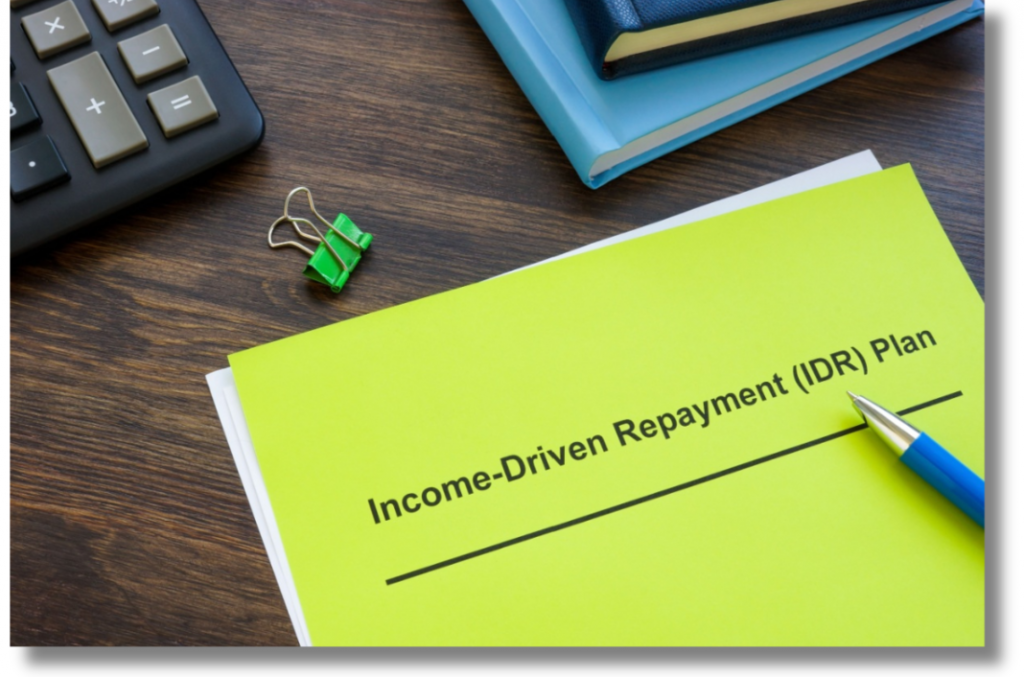
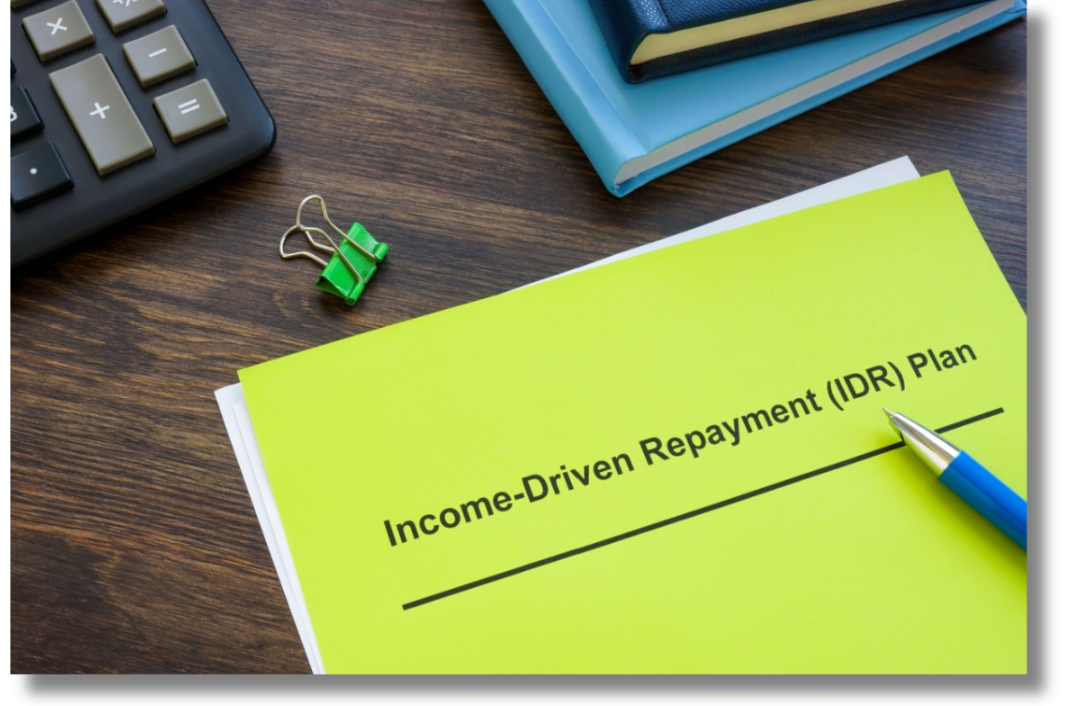
f you’re on an Income-Driven Repayment (IDR) plan for your student loans and preparing to apply for a mortgage, you might feel uncertain about how the conversation with a lender will go. Will they understand how your payments work? Will they use the right number? The good news is that with a little preparation, you can confidently explain your situation and ensure your application reflects your true financial picture. 

Mortgage lenders focus on one thing related to your student loans: your monthly payment amount. This number directly affects your debt-to-income (DTI) ratio, which helps determine how much home you can afford. 

For borrowers on IDR plans, the key is ensuring lenders use your actual documented IDR payment, not the standard payment amount listed on your credit report or in generic loan documents. Your IDR payment is likely lower, which can strengthen your application. 

Before meeting with a lender, gather: 

  • Your most recent student loan billing statement clearly showing your IDR payment amount 
  • Documentation of your repayment plan from your loan servicer (often called a “repayment plan certification”) 
  • Proof that your payments are current and in good standing

Having these documents ready signals organization and makes the lender’s job easier. 

When discussing your loans, be direct and specific. Try something like: 

“I’m on an Income-Driven Repayment plan for my student loans. My current monthly payment is [amount], and I’ve brought documentation showing that. Can you confirm that you’ll use this payment amount in my DTI calculation? 

This approach is professional, clear, and invites confirmation rather than assumption. 

Don’t be afraid to ask clarifying questions: 

  • “Which payment amount will appear on my loan application?” 
  • “Do you need anything else from my loan servicer to verify my IDR payment?” 
  • “If my payment changes during underwriting, how would that affect my approval?”

Good lenders appreciate informed borrowers who ask thoughtful questions. It makes the process smoother for everyone. 

Here’s an important truth: lenders vary in their familiarity with IDR plans. Some work with student loan borrowers regularly and understand the nuances. Others may default to standard payment amounts out of habit or caution. 

If a lender seems unsure about how to handle your IDR payments, you have options. You can provide additional documentation, ask to speak with a supervisor, or consider working with a lender who specializes in mortgages for borrowers with student debt. 

Your IDR plan is not a barrier to homeownership; it’s simply a detail that requires clear communication. With the right documentation and a confident approach, you can help your lender understand your situation and ensure your application accurately reflects your finances. 

Feeling prepared for these conversations is a key part of the homebuying journey. The guidance available through your employee homeownership program can help you think through these steps and connect with professionals who understand the nuances of student loans and mortgages. 

SupportSquad@AdvantageHomePlus.com | (800)511-2197

Can You Buy a Home With Income-Driven Student Loan Payments?

If you’re managing student loans through an Income-Driven Repayment (IDR) plan and dreaming of homeownership, you might wonder whether these two goals can coexist. The answer is yes with the right understanding of how mortgage lenders will evaluate your situation. Your IDR plan doesn’t close the door to buying a home; it simply requires a clear strategy. 

When you apply for a mortgage, lenders calculate your debt-to-income (DTI) ratio to determine whether you can comfortably afford a new monthly payment. This ratio compares your total monthly debt obligations to your gross monthly income. 

For borrowers on IDR plans, this is where clarity matters. Many loan programs allow lenders to use your actual documented IDR payment, not the potentially higher standard payment when calculating your DTI. This means your manageable, income-based payment can work in your favor during the mortgage approval process. 

To ensure lenders use your correct payment amount, you’ll need to provide: 

  • A current billing statement showing your IDR payment 
  • Documentation of your repayment plan from your loan servicer 
  • Proof that your payments are current and in good standing

Having these documents organized before you apply streamlines the process and prevents confusion. 

Having these documents organized before you apply streamlines the process and prevents confusion. 

While your IDR payment helps your DTI today, remember that these payments are recalculated annually based on your income and family size. If your income has increased significantly or is expected to, your future payment could rise. Lenders may consider this in their underwriting, especially if you’re on the edge of qualifying. 

Also, be aware that some loan programs treat IDR payments differently. Your employee homeownership program has mortgage lenders who understand student loan nuances can make a significant difference in whether you are able to be approved for a loan to buy a home.  

Your student loans are just one piece of the equation. Lenders will also look at your credit, income, savings, and overall financial stability when evaluating your application. 

The key is working with accurate information – not assumptions. Many people believe student loan debt automatically puts homeownership out of reach, but that’s often not the case, especially with income-driven repayment plans. 

Understanding how your specific situation will be viewed by lenders can make all the difference. A quick review with your Employee Homeownership Program can help you identify where you stand today – and what steps, if any, could strengthen your path forward. 

Income Verification in Mortgage Underwriting: What to Expect

Your income is a key factor in mortgage approval. Discover how underwriters verify earnings and employment to qualify you for a home loan.
Self-employed borrowers typically need to provide two years of tax returns to help underwriters establish stable, qualifying income.

Once you’ve applied for a mortgage, your loan file goes to an underwriter, the person responsible for evaluating your financial profile and determining whether you qualify. One of their most important tasks is verifying your income and employment. Understanding how this process works can help you prepare and avoid delays.

Underwriters verify income to answer a simple question: Can you reliably afford this mortgage? They need to confirm that the income you stated on your application is accurate, stable, and likely to continue . This verification protects both you and the lender from approving a loan that could become unaffordable.

For most salaried employees, underwriters typically request:

  • Recent pay stubs covering at least 30 days of year-to-date earnings 
  • W-2 forms from the past two years 
  • Written or verbal verification of employment directly from your employer 

The verbal verification often happens twice once during initial underwriting and again just a few days before closing to confirm you’re still employed .

How Self-Employed Borrowers Are Verified

If you’re self-employed or own a business, income verification looks different. Underwriters typically request:

  • Two years of personal and business tax returns 
  • Profit and loss statements
  • Signed IRS Form 4506-T, allowing the lender to request tax transcripts directly from the IRS 

Self-employed borrowers generally need to show consistent or growing income over time, as underwriters average earnings across multiple years to establish qualifying income.

Beyond the numbers, underwriters evaluate:

  • Income stability: Have you been with your employer for at least two years? Job-hopping can raise questions, though moves within the same industry may be acceptable with explanation.
  • Income type: Base salary is viewed most favorably. Bonuses, commissions, and overtime may be considered if consistently earned for at least two years .
  • Unusual deposits: Underwriters may question large, unexplained deposits in your bank accounts to ensure they aren’t undisclosed loans that would affect your debt-to-income ratio .

Income verification often happens in stages. Early in the process, your lender collects initial documentation. During underwriting, the information is scrutinized and verified. Finally, just before closing often within 10 days many lenders perform a final verbal verification of employment to confirm nothing has changed .

  • Be consistent: Ensure the income you report on your application matches your documents.
  • Avoid large, unexplained deposits: If you receive gift funds or have unusual transactions, document them with a letter of explanation .
  • Don’t change jobs before closing: Unless absolutely necessary, wait until after your loan funds.
  • Respond quickly to requests: Delays in providing requested documents can push back your closing date .

Income verification is a standard, thorough process designed to ensure you’re set up for success as a homeowner. When you understand what underwriters need and why, you can approach this step with confidence rather than uncertainty.

Feeling prepared for the underwriting process is part of overall homebuying readiness. The educational resources and personalized guidance available through your employer’s financial wellness benefit, with support from a trusted partner like Advantage Home Plus, can help you understand each step of the mortgage journey.

Debt Consolidation with Home Equity: What to Know

A calculator and notepad show the math behind consolidating multiple high-interest debts into a single lower monthly payment.
Using home equity to consolidate high-interest debt can simplify payments and reduce interest costs, but it requires careful consideration of the risks involved.

If you’re carrying high-interest debt credit cards, personal loans, or auto loans you may have heard that using your home equity to consolidate could lower your payments and save on interest. This strategy can be powerful, but it’s not right for everyone. Understanding how it works, the potential benefits, and the risks involved helps you decide if it aligns with your financial goals.

When you consolidate debt with home equity, you’re essentially taking out a new loan either a home equity loan or a Home Equity Line of Credit (HELOC) and using the funds to pay off your existing high-interest debts. Instead of making multiple payments to various creditors each month, you make a single payment on your home equity loan.

The appeal is simple: home equity loans typically offer lower interest rates than credit cards or personal loans because your home secures the debt.

Home Equity Loan: This is a lump-sum loan with a fixed interest rate and fixed monthly payments over a set term. It’s predictable and works well if you know exactly how much you need to consolidate.

HELOC: A line of credit that works more like a credit card. You can draw funds as needed during a “draw period,” and payments vary based on your balance. HELOCs often have variable rates, which means your payment could change over time.

  • Lower interest rate: Replacing 18-24% credit card debt with a single-digit home equity loan can save thousands in interest.
  • Simplified payments: One monthly payment instead of multiple due dates and minimums.
  • Potential tax deductibility: In some cases, interest on home equity loans used for home improvements may be tax-deductible (consult a tax professional).

Your home becomes collateral: Unlike credit card debt, which is unsecured, a home equity loan is secured by your home. If you can’t make payments, you risk foreclosure.

Closing costs and fees: Home equity loans often come with closing costs, appraisal fees, or annual fees that can add up.

The “revolving door” risk: Some borrowers consolidate debt but continue using credit cards, ending up with both a home equity loan and new credit card debt a worse position than where they started.

Variable rate uncertainty: With HELOCs, your payment could increase significantly if interest rates rise.

Before moving forward, consider:

  • Have I addressed the spending habits that created the debt?
  • Can I truly afford the new payment, even if my financial situation changes?
  • How does the new loan term compare? Stretching payments over 15-30 years could mean paying more interest long-term, even at a lower rate.
  • What are the fees, and how do they affect my break-even point?

Using home equity for debt consolidation can be smart when:

  • You have a solid plan to avoid accumulating new debt
  • The interest rate savings are substantial
  • You can afford the new payment comfortably
  • You’re using a fixed-rate product with predictable payments
  • You’ve addressed the root causes of the original debt

Proceed with caution if:

  • You haven’t changed the habits that led to the debt
  • You’re extending payments so long that total interest exceeds what you’d pay otherwise
  • Your income is unstable or likely to decrease
  • You’re using a variable-rate HELOC without a clear repayment plan

Your home equity is a valuable asset. Using it strategically to eliminate high-interest debt can strengthen your financial position but only if approached with discipline and clear understanding. This isn’t about moving debt around; it’s about creating genuine financial improvement.

Making this decision requires a clear view of your complete financial picture. The educational resources and personalized guidance available through your employer’s financial wellness benefit, with support from a trusted partner like Advantage Home Plus, can help you evaluate whether debt consolidation with home equity aligns with your goals.

Fixed-Rate vs Adjustable-Rate Mortgages: Pros & Cons 

Choosing between a fixed-rate and adjustable-rate mortgage? Understand the key differences, benefits, and trade-offs of each loan type.
Fixed-rate mortgages offer predictable payments for the life of the loan, ideal for buyers planning to stay in their home for many years.

When you’re ready to buy a home, one of the first major decisions you’ll face is choosing between a fixed-rate mortgage and an adjustable-rate mortgage (ARM). Each serves a different purpose and suits different financial situations and timelines. Understanding how they work and the trade-offs involved empowers you to choose the loan that truly aligns with your life.

A fixed-rate mortgage does exactly what it sounds like: the interest rate stays the same for the entire life of the loan, whether that’s 15, 20, or 30 years.

Pros:

  • Predictable payments: Your principal and interest payment never changes, making budgeting simple and stress-free.
  • Long-term stability: You’re protected from future interest rate increases, no matter how high rates climb.
  • Peace of mind: Ideal for buyers who plan to stay in their home for many years and want consistency.

Cons:

  • Higher initial rate: Fixed rates are typically higher than the starting rate on an ARM.
  • No benefit from rate drops: If market rates fall significantly, you’d need to refinance to capture savings.

Fixed-rate mortgages are the most popular choice for a reason. They offer simplicity and security, especially for buyers who value predictability and plan to put down roots.

An ARM features an interest rate that is fixed for an initial period (typically 3, 5, 7, or 10 years) and then adjusts periodically based on market conditions. A 5/1 ARM, for example, has a fixed rate for five years, then adjusts once per year thereafter.

Pros:

  • Lower initial rate: ARMs often start with a lower rate than fixed mortgages, which means lower monthly payments in the early years.
  • Potential for savings: If you sell or refinance before the adjustable period begins, you may never experience a rate increase.
  • Ideal for shorter timelines: Perfect for buyers who know they’ll move within a few years.

Cons:

  • Future uncertainty: After the fixed period ends, your rate and payment could increase.
  • Complexity: ARMs have caps on how much rates can increase, but understanding these limits requires careful attention.
  • Risk if plans change: If you plan to sell in five years but end up staying longer, you could face higher payments.

The right choice depends on your specific circumstances:

Consider a fixed-rate mortgage if:

  • You plan to stay in your home for 10+ years.
  • You prefer predictable payments and want to “set it and forget it.”
  • You’re risk-averse and want protection from future rate hikes.

Consider an ARM if:

  • You plan to move or refinance within the fixed-rate period.
  • You want to maximize cash flow in the early years of homeownership.
  • You’re comfortable with some uncertainty and understand how rate caps work.

Neither option is inherently “better.” They’re simply different tools for different situations. The key is aligning your mortgage choice with your timeline, financial goals, and comfort with uncertainty.

A 30-year fixed mortgage offers unmatched stability. A well-structured ARM can offer significant savings for the right buyer. Understanding your own plans and being honest about how long you’ll likely stay is the foundation of a smart decision.

Navigating these choices can feel overwhelming, but you don’t have to figure it out alone. Having clear, personalized guidance helps you weigh the trade-offs and choose with confidence.

The educational resources and one-on-one support available through your employer’s financial wellness benefit, with partners like Advantage Home Plus, can help you understand your options and build a mortgage strategy aligned with your unique life.

When Refinancing Makes Sense (Even If Rates Rise) 

Think refinancing only works when rates drop? There are powerful reasons to refinance even in a rising rate environment. Learn when it still makes sense.
Refinancing isn’t just about securing a lower rate; it can help you access equity, change loan terms, or eliminate monthly mortgage insurance.

Conventional wisdom says you should only refinance your mortgage when interest rates drop. While rate reductions are a powerful trigger, they’re not the only reason homeowners choose to refinance. In fact, many strategic refinances happen in flat or even rising rate environments because the benefits extend far beyond monthly payment savings. Understanding these scenarios can help you evaluate whether refinancing aligns with your broader financial goals.

If you currently have an adjustable-rate mortgage (ARM) and your fixed-rate period is approaching its end, refinancing to a fixed-rate loan can provide priceless peace of mind even if the new rate is slightly higher than your current one.

An ARM’s rate adjusts periodically based on market conditions, which means your payment could increase significantly over time. Locking in a fixed rate eliminates this uncertainty. You trade the possibility of future savings for the certainty of a predictable payment, which can be especially valuable as you approach retirement or simply value budget stability.

If you purchased your home with less than 20% down, you’re likely paying private mortgage insurance (PMI) typically 0.5% to 1% of your loan amount annually. Once your home equity reaches 20%, you can request PMI removal.

But what if your home has appreciated significantly? You might have 20% equity even if you haven’t paid down much of your principal. A refinance based on a new appraisal could eliminate PMI entirely. The monthly savings from dropping PMI might outweigh a modest rate increase, resulting in lower overall payments.

Home values have appreciated substantially in many markets. If you’ve built significant equity, a cash-out refinance allows you to access that equity for important goals:

  • Consolidating high-interest debt
  • Funding home renovations that increase property value
  • Covering major expenses like education or medical bills
  • Building an emergency reserve

Even at a slightly higher rate, replacing 18% credit card debt with 6% mortgage debt can save thousands annually.

Refinancing isn’t just about your rate, it’s about your loan structure. Moving from a 30-year mortgage to a 15-year term typically increases your monthly payment but can save tens of thousands in long-term interest. If your income has increased since you bought, you may now comfortably afford a shorter term.

Conversely, if you’re struggling with payments, refinancing to a longer term (say, from a 15-year to a 30-year loan) can reduce monthly obligations, providing breathing room even if rates are similar.

Life changes divorce, separation, or a co-borrower wanting off the loan may necessitate refinancing. If your ex-spouse needs to be removed from the mortgage, refinancing in your name alone is often the only solution. In this scenario, securing any rate that allows you to qualify independently is the win.

Refinancing decisions should be driven by your financial goals, not just rate headlines. A thoughtful analysis weighs:

  • Your new monthly payment and total interest costs
  • Closing costs and break-even timeline
  • How long you plan to stay in the home
  • Whether the new loan structure better serves your life

Sometimes, paying a slightly higher rate to achieve a more important goal like debt consolidation, PMI removal, or payment stability is the smartest financial move you can make.

Understanding these nuances helps you evaluate refinancing opportunities holistically. The educational resources and personalized guidance available through your employer’s financial wellness benefit, with support from a trusted partner like Advantage Home Plus, can help you run the numbers and determine if refinancing aligns with your unique situation.

How Long to Rebuild Credit After Late Payments? 

Late payments can hurt your credit, but the damage isn't permanent. Learn how long it takes to rebuild and the steps you can take to recover faster.
Rebuilding credit after late payments requires patience and consistency, but each on-time payment gradually strengthens your financial profile.

A late payment can feel like a major setback, especially when you’re working toward a goal like homeownership. You might worry that one mistake has permanently damaged your financial future. The reassuring truth is that credit is resilient, and so are you. With time and consistent positive habits, your credit score can recover. Understanding the timeline and the factors at play is the first step toward rebuilding with confidence. 

First, the facts: a late payment can remain on your credit report for seven years from the original delinquency date. That sounds daunting, but here’s what you need to know the impact of that late payment on your credit score is not static. It lessens over time, especially as you add new, positive payment history. 

Think of it this way: a late payment from three years ago matters far less to lenders than a late payment from three months ago. As time passes, its influence on your score gradually diminishes. 

How quickly your credit rebounds depends on several variables:

  • Your starting score: A higher score may see a steeper drop but can recover faster with consistent habits.
  • The severity of the lateness: A payment 30 days late has less impact than one 90 days late.
  • Your overall credit profile: A thin credit file may be more affected than a robust one with years of positive history.
  • Your actions afterward: This is the most important factor. What you do next determines your recovery speed.
  1. Prioritize on-time payments going forward: Payment history is the single biggest factor in your credit score (35%). Each on-time payment you make after a late payment gradually rebuilds trust with lenders.
  2. Reduce credit card balances: Your credit utilization ratio (how much of your available credit you’re using) is the second most important factor. Keeping balances low ideally below 30% of your limit can help boost your score.
  3. Avoid new credit applications: Each application triggers a hard inquiry, which can temporarily ding your score. Focus on managing existing credit well.
  4. Keep old accounts open: The length of your credit history matters. Keeping older accounts open (even with zero balance) preserves your history length.

While every situation is unique, here’s a general picture:

  • 3-6 months: With consistent on-time payments, you may see initial improvement.
  • 12-24 months: The late payment’s impact lessens significantly, especially if you’ve maintained positive habits.
  • 7 years: The late payment falls off your report entirely, though you’ll likely be in good standing long before this.

If homeownership is your goal, know that lenders typically want to see at least 12 months of on-time payments after a major delinquency. This demonstrates that the late payment was an isolated incident, not a pattern.

The path to recovery is paved with small, consistent actions. Each bill paid on time, each balance kept low, each month that passes these all contribute to a stronger financial profile.

Navigating credit recovery while planning for major goals like homeownership can feel overwhelming. Having a clear understanding of your timeline and the steps you can take makes all the difference.

The educational resources and personalized guidance available through your employer’s financial wellness benefit, with support from a trusted partner like Advantage Home Plus, can help you assess your credit situation, create a recovery plan, and understand how your progress aligns with your homeownership timeline.