
¿Está Pensando En Vender Su Casa Tal Como Está? Lea Esto Primero 

ISi está pensando en vender su casa este año, probablemente esté considerando dos opciones:

  • Venderla tal como está y evitar cualquier reparación.
  • Realizar algunas mejoras para que luzca mejor y, potencialmente, se venda a un precio más alto.

En 2026, esta decisión será más importante que antes. Le explicamos por qué.

El inventario de viviendas ha aumentado y, según las previsiones de Realtor.com, el número de casas en venta podría incrementarse un 8,9% este año. Con más opciones disponibles, los compradores pueden permitirse ser más selectivos, lo que significa que los detalles y el estado de la propiedad vuelven a ser importantes.

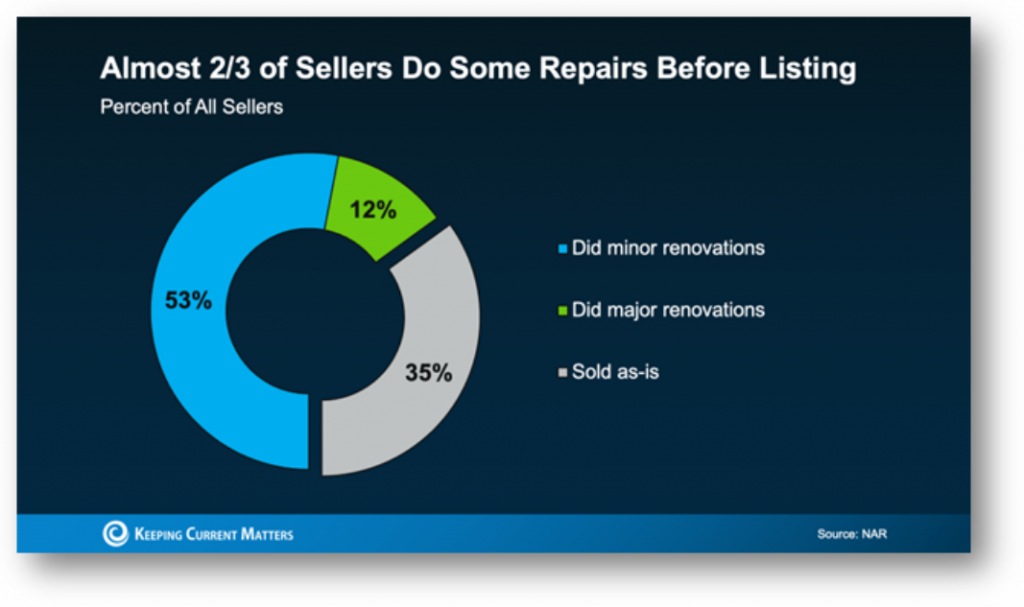
Un estudio reciente de la Asociación Nacional de Agentes Inmobiliarios (NAR) reveló que el 65% de los vendedores realizaron pequeñas reparaciones o mejoras antes de vender, mientras que solo el 35% vendió sus casas en el estado en que se encontraban (véase el gráfico).
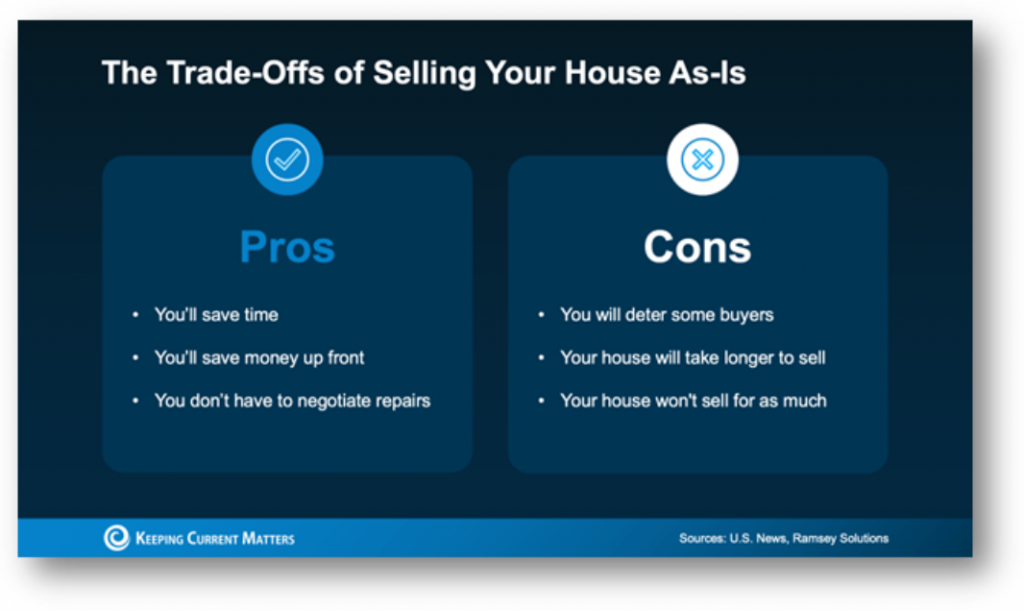
Vender una propiedad «tal cual» significa informar a los compradores desde el principio que no se realizarán reparaciones antes de la venta ni se negociarán arreglos después de la inspección. Si bien esto puede simplificar el proceso para el vendedor, a menudo limita el número de compradores potenciales.

Las casas listas para habitar suelen atraer más interés y recibir ofertas más atractivas. Las propiedades que necesitan reformas suelen tener menos visitas, menos ofertas y pueden permanecer más tiempo en el mercado, lo que a menudo resulta en un precio final más bajo.

Esto no significa que una casa que se vende «tal cual» no se venda. Simplemente significa que es posible que no se venda al precio máximo que podría alcanzar.

No existe una respuesta única para todos. La mejor opción depende de su vivienda, su presupuesto y el mercado local.

Ahí es donde el asesoramiento de un experto resulta fundamental. Un profesional con experiencia puede ayudarle a comprender qué reparaciones (si las hay) vale la pena realizar y cuál podría ser el precio de venta de su casa en cualquier caso.

  • Si vende la propiedad tal como está: la atención se centra en destacar la ubicación, la distribución y el potencial a largo plazo.
  • Si realiza reformas: puede priorizar las mejoras que más importan a los compradores, sin gastar de más.
¿La buena noticia? Dado que la primavera suele ser la temporada alta para la compra de viviendas, todavía hay tiempo para tomar decisiones bien pensadas sin prisas.

Vender una propiedad tal como está puede ser una buena opción en ciertas situaciones, pero en el mercado actual, podría tener un costo. No es necesario realizar reparaciones antes de poner la casa en venta, pero vale la pena analizar todas las opciones antes de tomar una decisión.

Como parte de su Programa de Adquisición de Vivienda para Empleados de Advantage Home Plus, no tiene que tomar esta decisión solo. Los empleados que estén pensando en vender su casa pueden acceder a asesoramiento para:

  • Comprender cómo la venta tal como está, en comparación con la realización de mejoras, puede afectar el precio y el plazo de venta. 
  • Analizar las prioridades de reparación y si es probable que las mejoras resulten rentables. 
  • Planificar su próximo paso, incluyendo la compra de otra vivienda o la coordinación de los plazos de venta. 
  • Obtener claridad antes de poner la casa en venta, para evitar sorpresas. 
  • Una breve conversación puede ayudarle a evaluar las ventajas y desventajas y decidir qué es lo más conveniente para su situación, antes de poner su casa en el mercado. 

Una breve conversación puede ayudarle a evaluar las ventajas y desventajas y decidir qué es lo más conveniente para su situación, antes de poner su casa en el mercado.

¿No Estás Seguro De Si Estás Listo Para Comprar Una Casa En 2026? Empieza Con Estas 5 Preguntas

Si estás pensando en comprar una casa el próximo año, probablemente estés considerando muchos factores a la vez: tus finanzas, las tasas hipotecarias actuales, los precios de las viviendas y la posible evolución de la economía. Puede resultar abrumador, sobre todo cuando todo el mundo parece tener una opinión sobre si este es el momento adecuado para comprar.

Aquí está la buena noticia: si bien las condiciones del mercado son importantes, solo son una parte del panorama. Tu preparación personal es igual de importante, y eso es algo que sí puedes controlar.

Si comprar una vivienda está entre tus planes para 2026, estas cinco preguntas pueden ayudarte a decidir si estás realmente preparado y qué pasos debes seguir a continuación. 

Comprar una casa es un compromiso a largo plazo, por lo que tener ingresos estables es un punto de partida importante. Esto no significa que su trabajo tenga que ser perfecto, pero saber que su salario es confiable le brindará tranquilidad al planificar.

Si no está seguro de cómo sus ingresos se traducen en un rango de pagos cómodo, este es un buen momento para detenerse y buscar asesoramiento antes de continuar.

Muchos compradores se sorprenden al descubrir que existe una diferencia entre lo que un prestamista puede aprobar y lo que realmente se ajusta a su presupuesto.

Comprender la capacidad de pago implica considerar:

  • La comodidad del pago mensual
  • Las deudas existentes
  • Otros objetivos financieros que desea proteger

Aquí es donde la planificación personalizada puede ser especialmente útil: analizar las cifras antes de hablar con un prestamista o comenzar la búsqueda de una casa.

Su puntaje crediticio influye significativamente en la tasa de interés y en el costo total del préstamo. Incluso pequeñas mejoras pueden marcar una gran diferencia a largo plazo. Si su crédito aún no está donde le gustaría, eso no significa que comprar una casa sea imposible; simplemente puede significar tomar algunas medidas inteligentes ahora para estar en una mejor posición más adelante este año.

Comprar una casa implica más que solo el pago inicial. Los gastos de cierre, los costos de mudanza y el mantenimiento futuro son factores importantes a considerar.

Según la Asociación Nacional de Agentes Inmobiliarios (NAR), permanecer en una casa durante varios años suele ser clave para que esos costos iniciales valgan la pena. Si planea establecerse en un lugar, comprar una casa puede ser una buena opción, pero es importante analizar primero su situación financiera completa.

Before selecting a real estate agent or lender, it can be helpful to talk with someone whose role is simply toAntes de seleccionar un agente inmobiliario o prestamista, puede ser útil hablar con alguien cuya función sea simplemente ayudarle a planificar, no a vender.

A través de su Programa de Adquisición de Vivienda para Empleados de Advantage Home Plus, usted tiene acceso a:

  • Sesiones individuales de asesoramiento y planificación
  • Revisión de crédito y orientación para mejorarlo
  • Ahorro en los gastos de cierre cuando esté listo para avanzar

Having this kind of support early can help you avoid surprises, make confident decisions, and feel prepared before taking the next step.

Comprar una casa no se trata de encontrar el momento perfecto en el mercado, sino de comprender tus finanzas, tus objetivos y tus opciones.

Si estás considerando seriamente comprar una casa en 2026, hablar con el Programa de Propiedad de Vivienda para Empleados de Advantage Home Plus puede ayudarte a aclarar tus dudas y elaborar un plan, antes de elegir un agente inmobiliario, solicitar un préstamo o hacer una oferta.

SupportSquad@AdvantageHomePlus.com | (800) 511-2197 

Thinking About Selling Your House As-Is? Read This First. 

If you’re thinking about selling your home this year, you may be weighing two options: 

  • Sell it as-is and skip repairs altogether 
  • Make a few updates so it shows better and potentially sells for more 

In 2026, that decision matters more than it used to. Here’s why. 

Inventory has been rising, and according to a Realtor.com forecast, the number of homes for sale could increase another 8.9% this year. With more choices available, buyers can afford to be selective again, which means details and condition are back in focus. 

A recent National Association of Realtors (NAR) study found that 65% of sellers completed minor repairs or improvements before selling, while only 35% sold their homes as-is (see chart). 

Selling as-is means you’re letting buyers know upfront that you won’t make repairs before listing or negotiate fixes after inspection. While that can simplify things on your end, it often limits your buyer pool. 

Move-in-ready homes tend to attract more interest and stronger offers. Homes that need work usually see fewer showings, fewer offers, and may sit on the market longer, often resulting in a lower final price. 

That doesn’t mean an as-is home won’t sell. It just means it may not sell for as much as it could. 

There’s no one-size-fits-all answer. The right choice depends on your home, your budget, and your local market. 

That’s where expert guidance helps. A knowledgeable professional can help you understand what repairs (if any) are worth making and what your home might sell for either way. 

  • If you sell as-is: The focus shifts to highlighting location, layout, and long-term potential. 
  • If you make updates: You can prioritize improvements that matter most to buyers, without overspending. 

The good news? With spring typically being the peak homebuying season, there’s still time to make thoughtful decisions without rushing. 

Selling as-is can make sense in certain situations – but in today’s market, it may come at a cost. You don’t have to make repairs before listing, but it’s worth fully understanding your options before you decide. 

As part of your Employee Homeownership Program through Advantage Home Plus, you don’t have to navigate that decision alone. Employees who are thinking about selling can access guidance to help them: 

  • Understand how selling as-is versus making updates could impact price and timing 
  • Think through repair priorities and whether improvements are likely to pay off 
  • Plan their next move, including buying another home or coordinating sale timing 
  • Get clarity before listing, so there are fewer surprises along the way 
  • A quick conversation can help you weigh the trade-offs and decide what makes the most sense for your situation – before you put your home on the market. 

A quick conversation can help you weigh the trade-offs and decide what makes the most sense for your situation – before you put your home on the market. 

Not Sure If You’re Ready to Buy a Home in 2026? Start With These 5 Questions

If you’re thinking about buying a home in the next year, you’re probably weighing a lot at once – your finances, today’s mortgage rates, home prices, and what the economy might do next. It can feel overwhelming, especially when everyone seems to have an opinion about whether now is the right time to buy.

Here’s the good news: while market conditions matter, they’re only part of the picture. Your personal readiness matters just as much — and that’s something you can actually control.

If buying is on your radar for 2026, these five questions can help you decide whether you’re truly ready – and what steps to take next. 

Buying a home is a long-term commitment, so having a steady income is an important starting point. That doesn’t mean your job has to be perfect – but knowing your paycheck is reliable can give you confidence as you plan. 

If you’re unsure how your income translates into a comfortable payment range, this is a good place to pause and get guidance before moving forward. 

Many buyers are surprised to learn there’s a difference between what a lender may approve and what actually fits their budget. 

Understanding affordability means looking at: 

  • Monthly payment comfort 
  • Existing debts 
  • Other financial goals you want to protect 

This is where one-on-one planning can be especially helpful – walking through numbers before you ever talk to a lender or start house hunting. 

Your credit score plays a major role in your interest rate and overall loan costs. Even small improvements can make a meaningful difference over time. If your credit isn’t quite where you want it to be yet, that doesn’t mean buying is off the table – it may simply mean taking a few smart steps now so you’re in a better position later this year. 

Buying a home involves more than a down payment. Closing costs, moving expenses, and future maintenance all factor into the decision. 

According to the National Association of Realtors (NAR), staying in a home for several years is often key to making those upfront costs worthwhile. If you’re planning to put down roots, buying may make sense – but it’s important to look at the full financial picture first. 

Before selecting a real estate agent or lender, it can be helpful to talk with someone whose role is simply to help you plan – not sell. 

Through your Employee Homeownership Program through Advantage Home Plus, you have access to: 

  • One-on-one coaching and planning conversations 
  • Credit review and improvement guidance 
  • Savings on closing costs when you’re ready to move forward 

Having this kind of support early can help you avoid surprises, make confident decisions, and feel prepared before taking the next step. 

Being ready to buy a home isn’t about timing the market perfectly – it’s about understanding your finances, your goals, and your options.  

If buying a home in 2026 is something you’re seriously considering, having a conversation with your Employee Homeownership Program through Advantage Home Plus can help you get clarity and build a plan – before choosing an agent, applying for a loan, or making an offer. 

SupportSquad@AdvantageHomePlus.com | (800) 511-2197 

Hidden Costs of Selling Your Home

Selling your home involves more than just agent commissions. Understand all the potential expenses to protect your profit and avoid surprises.
Understanding all potential selling expenses helps homeowners protect their equity and avoid financial surprises.

When planning to sell your home, most people focus on the potential sale price and real estate commission. However, several additional expenses can significantly impact your final profit. Understanding these hidden costs helps you set realistic expectations and protect your hard-earned equity throughout the selling process.


While real estate commissions are the most discussed expense, sellers also face various closing costs that can total 1% to 3% of the sale price. These typically include transfer taxes, title insurance, attorney fees, and recording fees. In some markets, sellers may also cover a portion of the buyer’s closing costs as a sales concession, which can add another 1% to 3% to your expenses.

Additionally, don’t forget about prorated property taxes, HOA fees, and any outstanding municipal liens. These amounts are settled at closing and deducted from your proceeds, so accounting for them early helps avoid surprises.


Before your home hits the market, you’ll likely need to invest in repairs and improvements to maximize your sale price. These can range from minor touch-ups like fresh paint and landscaping to major repairs identified during inspections. Many sellers spend between 1-2% of their home’s value on pre-listing repairs and updates.

Consider costs for professional cleaning, carpet cleaning, and potentially staging your home. While staging can help your home sell faster and for a higher price, it represents an upfront investment that needs to be factored into your overall budget.


If you purchase your next home before selling your current one, you may face overlapping mortgage payments, utility bills, and maintenance costs for both properties. Even a short overlap of 1-2 months can represent a significant financial burden.

Also consider potential HOA fees, lawn care, and basic utilities that continue until the sale officially closes. These holding costs can accumulate quickly, especially if your home sits on the market longer than anticipated.


While not everyone pays capital gains tax (thanks to the $250,000/$500,000 exclusion for single/married filers), if your profit exceeds these amounts, you’ll need to account for this tax liability. Consult with a tax professional to understand your specific situation.

Finally, don’t underestimate moving costs. Professional movers, packing supplies, temporary storage, and setting up utilities in your new home all add to your overall expenses. These typically range from a few hundred to several thousand dollars depending on the distance and amount of belongings.


Being aware of these potential costs allows you to create a realistic budget and timeline for your home sale. With proper planning and the right guidance, you can navigate these expenses while maximizing your final profit.

Understanding the full financial picture of home selling is an important part of homeownership readiness and long-term financial wellness.

Schedule your free consultation with Advantage Home Plus to explore your path to homeownership and receive personalized guidance for your specific situation.


Homeownership in Financial Wellness Strategy

advantage-home-plus-gives-home-ownership-advice
Employers who include homeownership support in their benefits package address both current and future financial wellness needs.


What Is National Homeownership Month and Why It Matters to You 

What Is National Homeownership Month and Why It Matters to You 

Each June, we celebrate National Homeownership Month — a time to recognize the value of owning a home and the many ways it strengthens lives, builds financial security, and empowers communities. Homeownership isn’t just about having a place to live — it’s about creating roots, building stability, and gaining the freedom to shape your own future. Whether you’re just starting to dream about owning a home, planning to sell, or considering refinancing, this month is a reminder that your goals are worth pursuing — and support is available to help you get there. 

National Homeownership Month was originally established in 1995 as a weeklong celebration and expanded to a full month in 2002 by presidential proclamation, but its purpose goes much deeper than a date on the calendar. It was created to highlight the importance of expanding access to homeownership, especially for people who may have thought it was out of reach. For many, owning a home is one of the most significant steps toward financial independence and long-term stability. It can also reduce stress, increase confidence, and provide a sense of pride in something you’ve built for yourself. This month serves as a national reminder that homeownership is still one of the most powerful ways to build personal and generational wealth — and that everyone deserves a fair shot at achieving it. 

Why Your Employer Offers an Employee Homeownership Program 

Your employer believes in the power of homeownership — not just as a financial milestone, but as a foundation for stability, confidence, and long-term well-being. They also recognize that the journey to buy, sell, or refinance a home can feel overwhelming and expensive. That’s why they’ve made this program available: to give you trusted support, expert guidance, and meaningful savings as you navigate one of life’s biggest financial decisions.  

Your Employee Homeownership Program is designed to help you make smart, confident decisions — whether you’re just starting to plan, actively house hunting, preparing to sell, or exploring ways to refinance. Through the program, you get access to: 

  • Free one-on-one consultations with your Homeownership Advisor 
  • Educational webinars to build your knowledge 
  • Personalized planning tools to assess affordability and financing 
  • Savings on real estate commissions and mortgage closing costs* 
  • Support every step of the way 

Celebrate National Homeownership Month by Taking Action 

There’s no better time to start planning than now. Whether homeownership feels close or years away, the guidance you’ll receive through your employee program can help you get clear on your options — and potentially save thousands along the way. 

Schedule your free consultation today and take one smart step closer to the future you’ve worked hard to build. 

SupportSquad@AdvantageHomePlus.com | (800)511-2197 


The information contained and the opinions expressed in this article are not intended to be construed as investment advice. Advantage Home Plus does not guarantee or warrant the accuracy or completeness of the information or opinions contained herein. Nothing herein should be construed as investment advice. You should always conduct your own research and due diligence and obtain professional advice before making any investment decision. * Real estate commission contributions are available as state laws allow. 

Understanding Home Appraisals: 

Understanding Home Appraisals: A Key Step in Your Homeownership Journey 

Whether you’re buying, selling, or refinancing a home, a crucial step in the process is obtaining a home appraisal. An appraisal provides an unbiased estimate of a property’s market value, ensuring all parties—buyers, sellers, and lenders—have a clear understanding of the home’s worth. 

What Is a Home Appraisal? 

A home appraisal is conducted by a licensed professional who evaluates the property’s condition, location, size, features, and comparable recent sales in the area (known as “comps”). This helps determine the home’s fair market value, which is especially important when a lender is involved in the transaction. 

Why Are Appraisals Important? 

For Buyers: Ensures you don’t overpay for the property. 

For Sellers: Helps set a competitive and realistic listing price. 

For Refinancing: Establishes if you have enough equity to qualify for better loan terms. 

What Happens If the Appraisal Comes In Low? 

If you’re buying a home and the appraisal comes in lower than your offer price, it can affect your ability to secure financing. But don’t panic — you have options: 

Renegotiate the Purchase Price: The seller may agree to lower the price to match the appraised value. 

Make Up the Difference in Cash: You can choose to pay the gap out-of-pocket if it aligns with your budget and long-term plans. 

Challenge the Appraisal: With the help of your real estate agent, you can review the appraisal for errors or missing comparables and request a reconsideration. 

Walk Away: If your contract includes an appraisal contingency, you may be able to cancel the contract without penalty. 

Your Employee Homeownership Program can guide you through this process to make the decision that best fits your goals. 

How Much Should You Offer on a Home? 

Most buyers aren’t sure how much to offer on a property — and that’s completely normal. The right offer price isn’t just about what the seller is asking. It’s about what the home is actually worth. 

That’s where comparable sales (comps) come in. These are recently sold homes in the same area with similar features (like size, number of bedrooms, and condition). Reviewing comps helps you and your agent determine a realistic, competitive offer price based on actual market data — not guesswork. 

The Role of Your Real Estate Agent 

A knowledgeable real estate agent plays a critical role in guiding your offer strategy. They: 

  • Analyze comps to help you write a smart offer 
  • Advise you on when to go strong or when to negotiate 
  • Help protect your interests in the contract 
  • Assist you in responding to a low appraisal 
  • Communicate with the seller’s agent to position you competitively 

The average agent in the U.S. only handles a few transactions a year — but the agents approved through your Employee Homeownership Program are vetted for experience, skill, and proven results. They understand the appraisal process and how to navigate challenging situations to protect your financial interests. 

How Your Homeownership Program Supports You 

Through your Employee Homeownership Program, you have access to: 

  • Trusted, high-performing real estate agents 
  • One-on-one coaching from your Homeownership Advisors 
  • Help preparing for appraisals and making smart offers 
  • Support if your appraisal comes in low 
  • Educational tools to build confidence at every step 
  • Reduced mortgage and real estate costs* 

Buying a home is one of the biggest financial decisions you’ll ever make — and it shouldn’t be done alone. Take advantage of the expert support available to you through your benefits. 

Schedule your free consultation today and get help navigating appraisals, home buying, offers, and everything in between. 

SupportSquad@AdvantageHomePlus.com | (800)511-2197 


The information contained and the opinions expressed in this article are not intended to be construed as investment advice. Advantage Home Plus does not guarantee or warrant the accuracy or completeness of the information or opinions contained herein. Nothing herein should be construed as investment advice. You should always conduct your own research and due diligence and obtain professional advice before making any investment decision. * Real estate commission contributions are available as state laws allow.