Home Buying With Student Loans Guide 

Home-Buying-With-Student-Loans
Buying a home with student loans is achievable with the right approach. Get expert guidance on navigating mortgage approval while managing education debt.

If you’re carrying student loan debt while dreaming of homeownership, you’re not alone and you’re not disqualified. Many successful homebuyers navigate this exact situation every year. With the right approach to money management and financial wellness, your education debt doesn’t have to prevent you from building equity in a home of your own. 


When mortgage lenders review your application, they’re not just looking at your total debt they’re assessing your ability to manage all your payments comfortably. The key metric they use is your debt-to-income ratio (DTI), which compares your monthly debt payments to your gross monthly income. 

Most conventional loans allow a DTI up to 43%, though some government-backed programs may be more flexible. Your student loans are part of this calculation, but they don’t automatically disqualify you. What matters most is demonstrating that you can handle all your financial obligations including a potential mortgage payment. 


1. Know Your Numbers 
Start by calculating your current DTI. Add up all your minimum monthly debt payments (student loans, car payment, credit cards) and divide by your gross monthly income. This gives you a clear starting point and helps you understand what mortgage payment you might comfortably afford. 

2. Explore Repayment Options 
If your student loan payments are high relative to your income, investigate income-driven repayment plans. These can lower your monthly payment, which improves your DTI and increases your home buying power. Just remember that extending your repayment term may mean paying more interest over time. 

3. Build Your Savings Strategy 
While some loan programs require as little as 3% down, having additional savings for closing costs and emergency funds strengthens your application. Consistent saving demonstrates financial responsibility to lenders and provides a safety net once you’re a homeowner. 


Myth: You need to pay off all student debt before buying a home. 
Reality: Most buyers don’t wait. What matters is having a manageable DTI and solid payment history. 

Myth: Student loans automatically disqualify you from the best mortgage rates. 
Reality: Your credit score, down payment, and DTI collectively determine your rate, not the mere presence of student debt. 


Creating a realistic timeline is crucial for home buying readiness. If your DTI needs improvement, give yourself 6-12 months to pay down credit cards or increase your income. Use this time to check your credit report for errors and build your savings. Remember that every on-time student loan payment helps your credit history. 


Financial wellness isn’t about having zero debt; it’s about managing your obligations while working toward your goals. Many people successfully balance student loans with mortgage payments by planning carefully and understanding lender requirements. 

The path to homeownership while managing student debt requires careful planning, but it’s achievable with the right information and preparation. 

Schedule your free consultation today to explore your path to homeownership and receive personalized guidance tailored to your unique financial situation. 


Helpful Negotiation Tactics for Today’s Housing Market – Spanish

      Tácticas de negociación en el mercado actual    

Si aún no lo ha escuchado, los compradores de vivienda están recuperando parte del poder de negociación en el mercado actual. Y aunque eso no convierte al mercado en uno de compradores, sí significa que los compradores pueden solicitar un poco más. Por eso, los vendedores deben estar preparados para esa posibilidad y saber de antemano qué están dispuestos a negociar.

Ya sea que esté buscando comprar o vender una casa, aquí tiene un breve resumen de las posibles negociaciones que pueden surgir durante su transacción. De esta manera, estará preparado sin importar de qué lado del trato se encuentre.

Qué puede negociar?

La mayoría de los aspectos en la compra de una vivienda están sobre la mesa de negociación. Aquí tiene solo algunos de esos elementos, según Kiplinger y LendingTree:

  • Precio de venta: El más evidente es el precio de la vivienda. Y este factor se está utilizando con mayor frecuencia hoy en día. Los compradores no quieren pagar de más cuando la asequibilidad ya es tan limitada. Y los vendedores que no son realistas con su precio de venta pueden tener que considerar ajustarlo.
  • Reparaciones de la vivienda: Con base en la inspección, el comprador tiene derecho a solicitar al vendedor reparaciones razonables. Si el vendedor no quiere hacerlas, puede ofrecer reducir el precio de la vivienda o cubrir parte de los costos de cierre, para que el comprador tenga el dinero y pueda afrontarlas por su cuenta.
  • Accesorios y electrodomésticos: Los compradores también pueden solicitar que se incluyan electrodomésticos o muebles en la venta. Que el vendedor incluya la lavadora y la secadora reduce los gastos que tendría el comprador al mudarse. Como vendedor, usted puede dejar los electrodomésticos existentes para endulzar la oferta para el comprador y comprarse unos nuevos en su próximo hogar.
  • Costos de cierre: Generalmente representan entre un 2% y un 5% del precio de compra de la vivienda. Los compradores pueden pedir al vendedor que pague algunos o todos estos gastos para reducir el efectivo que el comprador debe aportar al cierre.
  • Garantías de vivienda: Los compradores pueden pedir al vendedor que pague una garantía para la vivienda. Esto es excelente para compradores preocupados por los costos de mantenimiento que puedan surgir después de tomar posesión de la vivienda. Y, dado que esta concesión generalmente no es muy costosa para el vendedor, puede ser una buena opción para ambas partes.
  • Fecha de cierre: Los compradores pueden solicitar un cierre más rápido o más extendido según su propio calendario. El vendedor también puede defender lo que necesita según su mudanza para encontrar el compromiso adecuado.

Una cosa es cierta, ya sea que usted sea comprador o vendedor: su Programa de Propiedad de Vivienda para Empleados puede ayudarle durante todo el proceso. Pueden ayudarle a descubrir qué busca la otra parte, y esa información puede ser muy valiosa en la mesa de negociación.

En resumen

Los compradores están recuperando parte del poder de negociación en el mercado actual. Como comprador, conocer las palancas que puede accionar le ayudará a sentirse seguro y empoderado al hacer su compra. Como vendedor, anticipar lo que pueden pedirle le da la oportunidad de pensar qué estará dispuesto a ofrecer.

Quiere conversar más sobre qué esperar y las opciones que tiene? Conéctese con su Asesor del Programa de Propiedad de Vivienda para Empleados.

SupportSquad@AdvantageHomePlus.com | (800) 511-2197


La información y las opiniones contenidas en este artículo no deben interpretarse como asesoramiento en materia de inversiones. Advantage Home Plus no garantiza ni asegura la exactitud ni la integridad de la información u opiniones aquí contenidas. Nada de lo aquí expuesto debe interpretarse como asesoramiento de inversión. Usted siempre debe realizar su propia investigación y diligencia debida y obtener asesoramiento profesional antes de tomar cualquier decisión de inversión. Las contribuciones a las comisiones inmobiliarias están disponibles según lo permitan las leyes estatales.

A Record Number Are Planning To Buy in 2026 – Are You? – Spanish

      Un número récord planea comprar en 2026 — y usted?    

Este podría ser el año para vender su casa — y aquí le contamos por qué. Según una encuesta reciente de NerdWallet, el 15% de las personas planea comprar una vivienda este año. De hecho, esta cifra representa un récord histórico para esta encuesta (vea el gráfico a continuación):

Por qué esto es tan importante El porcentaje ha estado entre un 9 y un 11% desde 2021. Este aumento reciente muestra que la demanda de compradores no ha desaparecido; al contrario, indica que existe una demanda contenida lista para volver al mercado.

Eso no significa que se abrirán las compuertas ni que habrá una oleada masiva de compradores como vimos hace unos años. Pero sí señala que habrá más actividad este año que el anterior.
Al menos algunos de los compradores que habían pospuesto sus planes en los últimos años volverán a entrar al mercado. Ya sea porque se sienten más seguros para mudarse, porque finalmente han ahorrado lo suficiente para comprar, o simplemente porque no pueden esperar más: este es el año en el que planean dar el paso.

Y, según esa misma encuesta de NerdWallet, más de la mitad (54%) de esos posibles compradores ya han comenzado a buscar viviendas en línea.

Ese es un buen indicador de que varios de estos compradores estarán buscando durante la temporada alta de compra de viviendas esta primavera. Así que, si está pensando en vender su casa, es importante asegurarse de que su propiedad esté preparada, bien valorada y correctamente promocionada, para que pueda mostrársela a ellos.

En resumen

Más personas se van a mudar este año y, con la estrategia adecuada, usted puede asegurarse de que su casa sea una de las primeras que vean. Su Programa de Propiedad de Vivienda para Empleados puede ayudarle a crear una estrategia para que su casa sea vista por los compradores adecuados, se venda y maximice su beneficio.

Qué cree que les gustará más de su casa a estos compradores?
Conéctese con su Asesor del Programa de Propiedad de Vivienda para Empleados para comentarlo y asegurarse de que ese aspecto esté en primer plano en su anuncio.

SupportSquad@AdvantageHomePlus.com | (800) 511-2197


La información y las opiniones contenidas en este artículo no deben interpretarse como asesoramiento en materia de inversiones. Advantage Home Plus no garantiza ni asegura la exactitud ni la integridad de la información u opiniones aquí contenidas. Nada de lo aquí expuesto debe interpretarse como asesoramiento de inversión. Usted siempre debe realizar su propia investigación y diligencia debida y obtener asesoramiento profesional antes de tomar cualquier decisión de inversión. Las contribuciones a las comisiones inmobiliarias están disponibles según lo permitan las leyes estatales.

Thinking About Investment Property? Here’s What You Should Know – Spanish

Está pensando en una propiedad de inversión? Esto es lo que debe saber

Explorar inversiones inmobiliarias, como comprar una vivienda para alquilar, puede ser una forma inteligente de generar riqueza a largo plazo. No solo los ingresos por alquiler pueden apoyar su flujo de efectivo mensual, sino que el valor de la vivienda también puede apreciarse con el tiempo.

Tipos a considerar

  • Viviendas unifamiliares: Simples, menor mantenimiento, ideales para inversionistas primerizos.
  • Edificios multifamiliares (dúplex, tríplex, etc.): Mayor potencial de ingresos pero requieren más gestión.
  • Unidades de vivienda accesorias (ADU): Apartamentos en garaje o en el patio que pueden generar ingresos por alquiler sin comprar una nueva propiedad.

Analizando los números

Antes de comprar, siempre tenga en cuenta:

  • Pagos hipotecarios (capital + intereses)
  • Impuestos sobre la propiedad y seguro para arrendadores
  • Mantenimiento, reparaciones, períodos de vacancia y honorarios de administración

Consideraciones sobre el financiamiento

El financiamiento para propiedades de inversión generalmente requiere:

  • Pagos iniciales más altos (a menudo 15–20%)
  • Puntuaciones de crédito más altas y requisitos más estrictos del prestamista
  • Reservas de efectivo amplias (que cubran de 3 a 6 meses de pagos hipotecarios) para afrontar costos inesperados o períodos de vacancia

Comience con inteligencia

Una tendencia creciente, llamada “house hacking”, consiste en comprar una propiedad multifamiliar, vivir en una parte y alquilar las demás. Usted podría calificar para un pago inicial más bajo porque cuenta como residencia principal. Como residencia principal, solo necesita comprometerse a vivir en la propiedad durante los próximos 12 meses. Después de 12 meses, puede alquilar ambas unidades y comprar otra propiedad.

Cómo le ayuda su beneficio de propiedad de vivienda para empleados

Navegar por las decisiones sobre propiedades de inversión no tiene por qué ser abrumador. A través de su Programa de Propiedad de Vivienda para Empleados, usted obtendrá:

  • Una consulta de Bienestar Financiero para revisar su situación y evaluar si invertir tiene sentido para usted.
  • Apoyo experto para identificar opciones de financiamiento que se adapten a sus objetivos.
  •  Acceso a agentes inmobiliarios preseleccionados que conocen los vecindarios de inversión y pueden guiarlo con confianza.

Listo para explorar?

Tiene curiosidad por saber si una propiedad de alquiler podría ser su próximo paso? Solicite una consulta gratuita. Obtendrá claridad sobre si la inversión en alquiler se alinea con sus objetivos y cómo sus beneficios pueden ayudarle a que sea más sencilla y menos costosa.

Comencemos a ayudarle a construir un impulso financiero a largo plazo — ya sea que esté pensando en su primera vivienda o en su próxima aventura inmobiliaria.

SupportSquad@AdvantageHomePlus.com | (800) 511-2197


La información y las opiniones contenidas en este artículo no deben interpretarse como asesoramiento en materia de inversiones. Advantage Home Plus no garantiza ni asegura la exactitud ni la integridad de la información u opiniones aquí contenidas. Nada de lo aquí expuesto debe interpretarse como asesoramiento de inversión. Usted siempre debe realizar su propia investigación y diligencia debida y obtener asesoramiento profesional antes de tomar cualquier decisión de inversión. Las contribuciones a las comisiones inmobiliarias están disponibles según lo permitan las leyes estatales.

Understanding Mortgage Income Guidelines: What You Need to Know – Spanish

      Comprender las pautas de ingresos hipotecarios:   lo que necesita saber    

Está pensando en comprar una vivienda? Una de las primeras preguntas que muchos se hacen es: cuánto ingreso necesito realmente? La respuesta no es una cantidad fija, sino que varía. Lo más importante no es solo el nivel de ingresos, sino su salud financiera en general.

No hay ingreso mínimo — pero sus finanzas siguen contando

No existe un requisito universal de ingresos para calificar para una hipoteca. En cambio, los prestamistas se enfocan en si sus ingresos pueden respaldar de manera confiable sus pagos mensuales. El factor más importante? Su relación deuda-ingresos (DTI, por sus siglas en inglés).

Referencias típicas de DTI según el tipo de préstamo:

  • Préstamos convencionales: hasta aproximadamente 39% en general (puede llegar hasta ~50% con factores compensatorios).
  • Préstamos FHA: hasta aproximadamente 43–50% bajo ciertas condiciones.
  • Préstamos VA y USDA: normalmente hasta ~41%.

Cómo calcular el DTI:
DTI = (Deudas mensuales totales + pago de vivienda esperado) ÷ Ingreso mensual bruto

Por ejemplo, si sus deudas más la vivienda costarían $2,500 al mes y su ingreso es $6,000 al mes, su DTI es de aproximadamente 42%.

Qué cuenta como “ingreso”?

Sorprendentemente, el ingreso que califica es más flexible de lo que muchos esperan. Los prestamistas pueden considerar:

  • Sueldo de empleos (tiempo completo, tiempo parcial, horas extras).
  • Trabajo freelance o por contrato (con documentación fiscal).
  • Bonos, comisiones y propinas — promediados con el tiempo.
  • Pagos de jubilación, pensión o Seguro Social.
  • Manutención por divorcio, pagos de fideicomisos, ingresos por alquiler y más — con la debida documentación.

Ingresos estables y documentación: la clave

Su capacidad de pago —no solo su ingreso— es lo que realmente importa. Para la mayoría de los préstamos, los prestamistas solicitarán:

  • Al menos 2 años de historial laboral o de ingresos estables.
  • Documentos como formularios W-2, recibos de pago recientes, declaraciones de impuestos, estados de resultados (para autónomos).
  • Comprobación de reservas suficientes, a menudo 2+ meses de pagos hipotecarios, puede mejorar sus posibilidades de aprobación.

Cómo le apoya su Programa de Propiedad de Vivienda para Empleados

Su beneficio no solo se trata de educación; también ofrece orientación personalizada:

  • Una consulta gratuita de Bienestar Financiero para evaluar para qué califica y qué tipos de préstamos podrían ser ideales para usted.
  • Ayuda para identificar si su DTI necesita ajustes y estrategias para reducirlo.
  • Apoyo para reunir la documentación de ingresos, especialmente si es autónomo o tiene fuentes de ingresos no tradicionales.
  • Acceso a prestamistas aprobados por el programa que ofrecen condiciones favorables y opciones flexibles.

En resumen

No necesita un ingreso específico; lo que importa es su fiabilidad financiera y la documentación que lo respalde. Si no está seguro de su situación, comuníquese con su Programa de Propiedad de Vivienda para Empleados. Ellos pueden ayudarle a aclarar su elegibilidad, explorar sus opciones y encaminarlo hacia una experiencia de compra de vivienda informada y segura.

SupportSquad@AdvantageHomePlus.com | (800)511-2197


La información y las opiniones contenidas en este artículo no deben interpretarse como asesoramiento en materia de inversiones. Advantage Home Plus no garantiza ni asegura la exactitud ni la integridad de la información u opiniones aquí contenidas. Nada de lo aquí expuesto debe interpretarse como asesoramiento de inversión. Usted siempre debe realizar su propia investigación y diligencia debida y obtener asesoramiento profesional antes de tomar cualquier decisión de inversión. Las contribuciones a las comisiones inmobiliarias están disponibles según lo permitan las leyes estatales.

A Record Number Are Planning To Buy in 2026 – Are You? 

A Record Number Are Planning To Buy in 2026 – Are You?

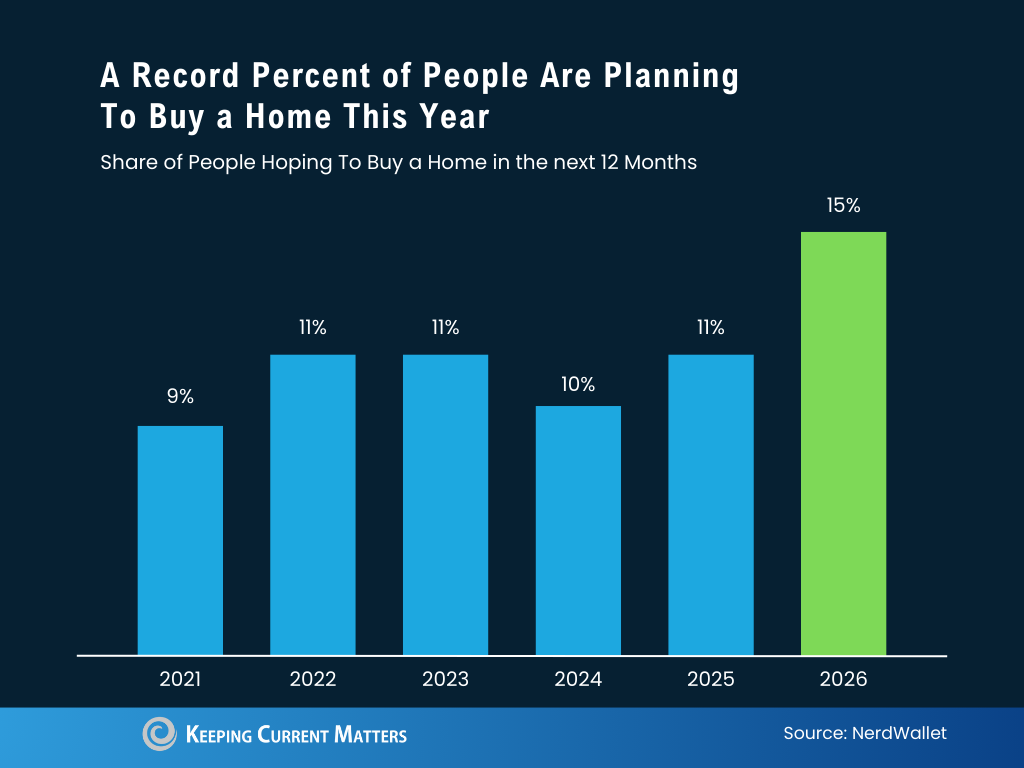
This could be the year to sell your house – and here’s why. According to a recent NerdWallet survey, 11% of people are planning to buy a home this year. That’s actually a record high for this survey (see graph below):

Here’s why this is such a big deal. The percentage has been hovering between 9-11% since 2021. This recent increase shows buyer demand hasn’t disappeared – if anything, it indicates there’s pent-up demand ready to come back to the market.

That doesn’t mean the floodgates are opening and that there’s going to be a huge wave of buyers like we saw a few years ago. But this does signal there’ll be more activity this year than last.

At least some of the buyers who put their plans on hold over the past few years will jump back in. Whether they’re feeling more confident about moving, they’ve finally saved up enough to buy, or they simply can’t wait any longer – this is the year they’re aiming to take the plunge.

And, according to that same NerdWallet survey, more than half (54%) of those potential buyers have already started looking at homes online.

That’s a good indicator that a number of these buyers will be looking during the peak homebuying season this spring. So, if you’re considering selling your home, it’s important to make sure your house is prepped, priced, and marketed well, so you can get your house in front of them.

Bottom Line

More people are going to move this year, and with the right strategy, you can make sure your house is one of the first they look at. Your Employee Homeownership Program can help you create a strategy to get your home seen by the right buyers, sold, and maximize your profit.

What do you think these buyers will love most about your house?

Connect with your Employee Homeownership Advisor to talk it over and make sure it’s front and center in your listing.

SupportSquad@AdvantageHomePlus.com | (800) 511-2197


The information contained and the opinions expressed in this article are not intended to be construed as investment advice. Advantage Home Plus does not guarantee or warrant the accuracy or completeness of the information or opinions contained herein. Nothing herein should be construed as investment advice. You should always conduct your own research and due diligence and obtain professional advice before making any investment decision. * Real estate commission contributions are available as state laws allow. 

Helpful Negotiation Tactics for Today’s Housing Market

Helpful Negotiation Tactics for Today’s Housing Market

If you haven’t already heard, homebuyers are regaining some negotiating power in today’s market. And while that doesn’t make this a buyer’s market, it does mean buyers may be able to ask for a little more. So, sellers need to be ready for that possibility and know what they’re willing to negotiate.

Whether you’re looking to buy or sell a house, here’s a quick rundown of potential negotiations that may pop up during your transaction. That way, you’re prepared no matter which side of the deal you’re on.

What Can You Negotiate?

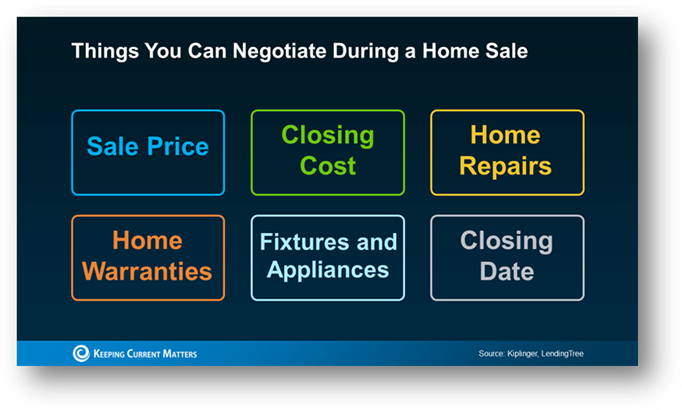
Most things in a home purchase are on the negotiation table. Here’s a list of just a few of those options, according to Kiplinger and LendingTree:

  • Sale Price: The most obvious is the price of the home. And that lever is being pulled more often today. Buyers don’t want to overpay when affordability is already so tight. And sellers who aren’t realistic about their asking price may have to consider adjusting their price.
  • Home Repairs: Based on the inspection, a buyer is within their rights to ask the seller to make reasonable repairs. If the seller doesn’t want to do that, they could offer to reduce the home price or cover some closing costs, so the buyer has the money to take them on themselves.
  • Fixtures: Buyers can also ask for appliances or furniture to convey when the house changes hands. Having the seller throw in the washer and dryer cuts down on expenses the buyer would have when moving in. As the seller, you could leave your existing ones behind to sweeten the deal for your buyer, and get yourself new ones for your next place.
  • Closing Costs: Closing costs typically run about 2-5% of the home’s purchase price. Buyers can ask the seller to pay for some or all of these expenses to offset the cash the buyer has to bring to the table. 
  • Home Warranties: Buyers can also ask the seller to pay for a home warranty. This is great for buyers worried about the maintenance costs that may pop up after taking possession of the home. And since this concession usually isn’t terribly expensive for the seller, it can be a good option for both parties.
  • Closing Date: Buyers can ask for a faster or extended closing window based on their own timetable. The seller can also advocate for what they need based on their move to find the right compromise.

One thing is true whether you’re a buyer or a seller, and that’s how much your Employee Homeownership Program can help you throughout the process. They may be able to help you uncover what the buyer or seller is looking for, and that insight can be really valuable at the negotiation table. 

Bottom Line

Buyers are regaining some negotiation power in today’s market. Buyers, knowing what levers you can pull, will help you feel confident and empowered going into your purchase. Sellers, having a heads up of what they may ask for, gives you the chance to think through what you’ll be willing to offer.

Want to chat more about what to expect and the options you have? Connect with your Employee Homeownership Advisor.

SupportSquad@AdvantageHomePlus.com | (800) 511-2197


The information contained and the opinions expressed in this article are not intended to be construed as investment advice. Advantage Home Plus does not guarantee or warrant the accuracy or completeness of the information or opinions contained herein. Nothing herein should be construed as investment advice. You should always conduct your own research and due diligence and obtain professional advice before making any investment decision. * Real estate commission contributions are available as state laws allow. 

Thinking About Investment Property? Here’s What You Should Know

Thinking About Investment Property? Here’s What You Should Know

Exploring real estate investments, like purchasing a rental home, can be a smart way to build long-term wealth. Not only can rental income support your monthly cash flow, but home values may appreciate over time.

Types to Consider

  • Single-family homes – Simple, lower upkeep, great for first-time investors
  • Multi-unit buildings (duplexes, triplexes, etc.) – Higher income potential but more management required
  • Accessory Dwelling Units (ADUs) – Garage or backyard apartments can bring rental income without buying a new property.

Crunching the Numbers

  • Before buying, always factor in:
  • Mortgage payments (principal + interest)
  • Property taxes and landlord insurance
  • Maintenance, repairs, vacancy periods, and management fees
  • Financing Considerations
  • Investment property financing typically requires:
  • Higher down payments (often 15–20%)
  • Higher credit scores and stricter lender requirements
  • Ample cash reserves (covering 3–6 months of mortgage payments) to buffer against unexpected costs or vacancies

Start Smart

A rising trend, called “house hacking”, involves buying a multi-unit property, living in one part, and renting out the others. You may qualify for a lower down payment because it counts as a primary residence. As a primary residence, you only need to commit to living in the property for the next 12 months. After 12 months, you can rent out both units and buy another property.


How Your Employee Homeownership Benefit Can Help

Navigating investment property decisions doesn’t have to be overwhelming. Through your Employee Homeownership Program, you’ll get:

  • A Financial Fitness Consultation to walk through your situation and evaluate if investing makes sense for you
  • Expert support identifying financing options that fit your goals
  • Access to pre-vetted real estate agents who know investment neighborhoods and can guide you confidently

Ready to Explore?

Curious whether a rental property could be your next move? Reach out for a free consultation. You’ll gain clarity on whether rental investing aligns with your goals, and how your benefits can help make it smoother and less expensive.

Let’s get started on helping you build long-term financial momentum—whether you’re thinking of your first home or your next property venture.

SupportSquad@AdvantageHomePlus.com | (800) 511-2197


The information contained and the opinions expressed in this article are not intended to be construed as investment advice. Advantage Home Plus does not guarantee or warrant the accuracy or completeness of the information or opinions contained herein. Nothing herein should be construed as investment advice. You should always conduct your own research and due diligence and obtain professional advice before making any investment decision. * Real estate commission contributions are available as state laws allow. 

Understanding Mortgage Income Guidelines: What You Need to Know

Understanding Mortgage Income Guidelines: What You Need to Know

Thinking of buying a home? One of the first questions many ask is: How much income do I really need? The answer isn’t a flat dollar amount, it varies. What matters most is not just income level, but your overall financial health.

No Minimum Income – But Your Finances Still Count

There is no universal income requirement to qualify for a mortgage. Instead, lenders focus on whether your income can support your monthly payments reliably. The most important factor? Your Debt-to-Income (DTI) ratio.

Typical DTI benchmarks by loan type:

  • Conventional loans: up to ~39% generally (can stretch to ~50% with compensating factors)
  • FHA loans: up to ~43–50% under certain conditions
  • VA and USDA loans: typically up to ~41%

How to calculate DTI: DTI = (Total monthly debts + expected housing payment) ÷ Gross monthly income. For example, if your debts plus housing would cost $2,500/month and your income is $6,000/month, your DTI is ~42%.

What Counts as “Income”?

Surprisingly, qualifying income is more flexible than many expect. Lenders may consider:

  • Pay from jobs (full-time, part-time, overtime)
  • Freelance or contract work (with tax documentation)
  • Bonuses, commissions, and tips — averaged over time
  • Retirement, pension, or Social Security payments
  • Divorce support, trust payouts, rental income, and more — with proper documentation

Stable Income & Documentation Are Key

Your ability to repay—not just your income—is what really matters. For most loans, lenders will want:

  • At least 2 years of steady work history or income.
  • Documentation like W-2s, recent pay stubs, tax returns, profit-and-loss statements (for self-employed).
  • Proof of sufficient reserve, often 2+ months of mortgage payments, can improve your approval chances.

Here’s How Your Employee Homeownership Program Supports You

Your benefit isn’t just about education; it offers personalized guidance, too:

  • A free Financial Fitness Consultation to assess what you qualify for and which loan types might be an ideal fit
  • Help identifying if your DTI needs adjustment and strategies to reduce it
  • Support gathering income documentation, especially for self-employed or non-traditional income sources
  • Access to program-approved lenders offering favorable terms and flexible options

Bottom Line

You don’t need a specific income; what matters is your financial reliability and the documentation to support it. If you’re unsure where you stand, reach out to your Employee Homeownership Program. They can help clarify your eligibility, explore your options, and put you on the path toward a confident and informed homebuying experience.

SupportSquad@AdvantageHomePlus.com | (800)511-2197


The information contained and the opinions expressed in this article are not intended to be construed as investment advice. Advantage Home Plus does not guarantee or warrant the accuracy or completeness of the information or opinions contained herein. Nothing herein should be construed as investment advice. You should always conduct your own research and due diligence and obtain professional advice before making any investment decision. * Real estate commission contributions are available as state laws allow. 

Struggling To Sell Your House? Read This. – Spanish 

Tienes dificultades para vender tu casa? Lee esto.

Cuando vendes tu casa, lo ideal es que suceda algo así: la vendes por el mejor precio, se vende rápidamente y todo transcurre sin problemas.

Pero lo que muchas personas no se dan cuenta es que hay factores que pueden causar demoras o incluso impedir que una casa se venda. Según Zillow, en 2024, hasta 1 de cada 3 vendedores retiraron su casa del mercado antes de que finalmente se vendiera.

Y aunque las razones pueden variar, hay algunos temas comunes que suelen repetirse. Si estás teniendo dificultades para vender tu casa, aquí tienes los tres principales obstáculos que podrían estar interfiriendo, y cómo un agente experto puede ayudarte a resolverlos:

1. Precio demasiado alto

No es sorpresa que el precio juegue un papel clave al vender una casa. Y en el mercado actual, sobrevalorar una propiedad en un entorno de tasas hipotecarias altas es el principal motivo por el que muchas casas permanecen más tiempo del esperado en el mercado. Como dice U.S. News Real Estate:

“Habla con cualquier experto en bienes raíces y lo primero que te dirán es que una casa se vende lentamente porque el precio es demasiado alto.”

Aunque puede ser tentador fijar un precio elevado para obtener más, sobrevalorar tu casa puede alejar a los compradores. Además, puede hacer que tu propiedad permanezca demasiado tiempo en el mercado, lo que genera dudas en los compradores sobre si hay algo malo con ella, incluso si no es así. Hoy en día, los compradores tienen acceso a muchas herramientas para comparar precios en la zona. Si el tuyo está fuera de rango, probablemente lo ignorarán.

Sospechas que esto podría estar pasando con tu propiedad? Habla con tu agente sobre los comentarios que están recibiendo en las visitas y jornadas abiertas. Si hay una tendencia clara, puede ser momento de revisar el precio de venta.  

2. Falta de preparación antes de publicar

Solo tienes una oportunidad para causar una buena primera impresión. Por eso, preparar bien tu casa puede marcar la diferencia entre venderla o no. Empieza por el atractivo exterior: a veces, un pequeño trabajo de jardinería o limpieza puede hacer que tu casa se vea más ordenada y acogedora. Como menciona Realtor.com:

“Para bien o para mal, los compradores tienden a juzgar un libro por su portada. Asegúrate de que su primera impresión de tu casa sea buena y los motive a visitarla.”

Pero no te detengas en la entrada. Pequeños detalles como quitar objetos personales, reducir el desorden o limpiar los pisos ayudan a que los compradores puedan imaginarse viviendo allí. Incluso mejoras sencillas, como una nueva capa de pintura o fotos actualizadas que reflejen la temporada actual, pueden marcar la diferencia. Si tienes dudas, consulta con tu agente inmobiliario para saber si necesitas un nuevo enfoque para concretar la venta. 

3. Acceso limitado 

Otro gran error que puedes cometer como vendedor es limitar los días u horarios en que los compradores pueden ver tu casa. Si no pueden verla, tus posibilidades de venta bajan drásticamente.

Además, ten en cuenta que muchos compradores vienen de fuera de la ciudad, están altamente motivados pero tienen menos flexibilidad para hacer visitas. Por eso, cuanto más accesible esté tu casa, más visibilidad tendrá—y mayores serán tus probabilidades de vender.

Conclusión

Te mereces cumplir tu meta de vender tu casa este año. Así que si tu propiedad no está recibiendo la atención que esperabas o tu anuncio ya se está volviendo obsoleto, no dudes en hablar con tu asesor del Programa de Propiedad de Vivienda para Empleados para redefinir tu estrategia y lograr que se venda.  

SupportSquad@AdvantageHomePlus.com  |  (800) 511-2197 


La información contenida y las opiniones expresadas en este artículo no deben interpretarse como asesoramiento de inversión. Advantage Home Plus no garantiza ni asegura la exactitud o integridad de la información u opiniones aquí presentadas. Nada de lo mencionado debe considerarse como asesoramiento de inversión. Siempre debes realizar tu propia investigación y diligencia debida, y obtener asesoramiento profesional antes de tomar cualquier decisión de inversión. Las contribuciones a comisiones inmobiliarias están disponibles según lo permitan las leyes estatales.