Expert Forecasts Point to Affordability Improving in 2026 
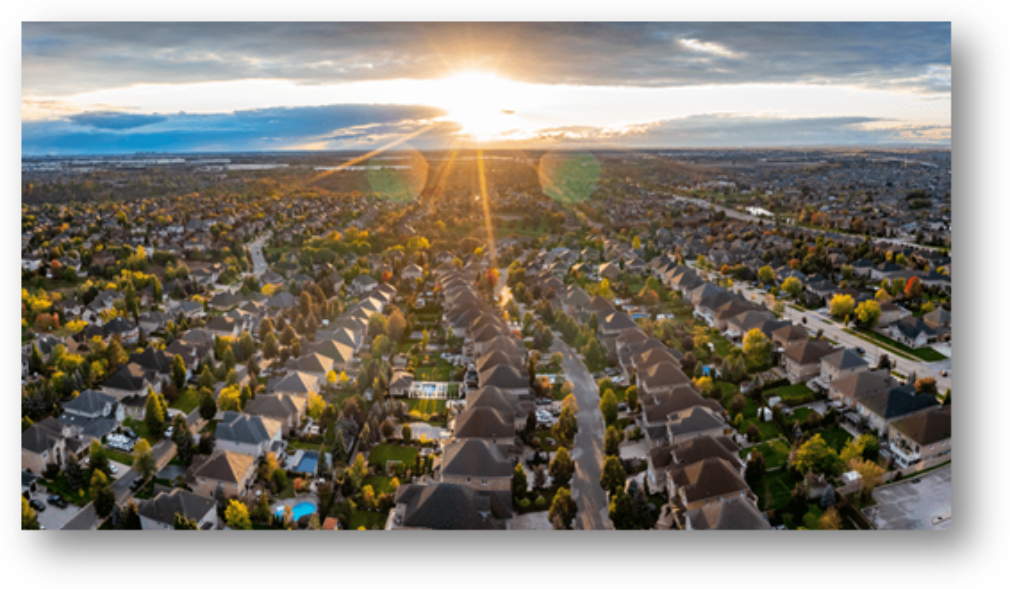
If you’ve been wondering what to expect from the housing market in 2026, you’re not alone! For the past few years, affordability has been the biggest hurdle for buyers and sellers alike. Many people have been waiting on the sidelines, hoping conditions would improve.  The good news? They are. 

In fact, affordability in 2025 was the best it’s been in three years and experts agree that momentum is expected to continue into 2026. Their outlook is based on three key factors shaping the market ahead: mortgage rates, housing inventory, and home prices. 

Mortgage rates have come down from their recent peak – by nearly a full percentage point over the past year. That shift may sound modest, but it can make a meaningful difference in monthly payments and overall buying power. 

So where do rates go next? Forecasts suggest they’ll largely stabilize, hovering in the low 6% range throughout 2026 (see graph below). 
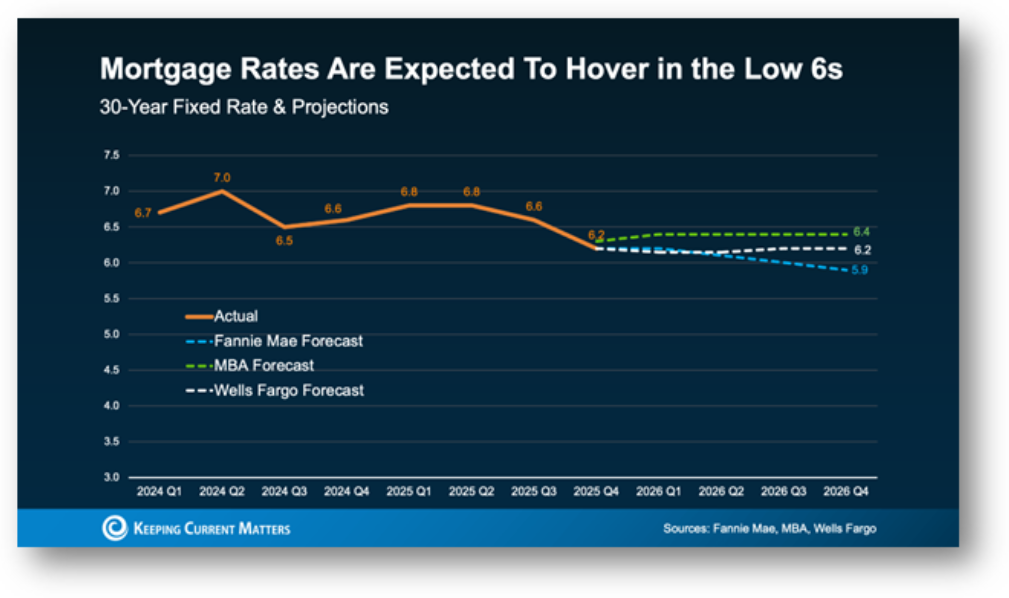
Where rates move from here will depend on the broader economy, job growth, and future decisions by the Federal Reserve. What matters most is that rates are already lower than they were a year ago, creating better conditions for anyone planning a move in 2026. 

  • For buyers: Lower rates can reduce monthly payments and expand purchasing power. 
  • For sellers: Rates in the 6% range may be the new normal — and many moves are still very doable, especially with accumulated equity. 

Housing inventory made meaningful progress in 2025, rising about 15%. As more homes came on the market, buyers gained something they hadn’t had in years: more choices, more time, and more negotiating leverage. That shift helped restore balance and slow rapid price growth. 

Looking ahead, experts at Realtor.com project inventory will continue to improve, with supply expected to grow another 8.9% (see graph below). 

  • For buyers: More options and increased negotiating power. 
  • For sellers: Pricing strategically will matter more than ever. 
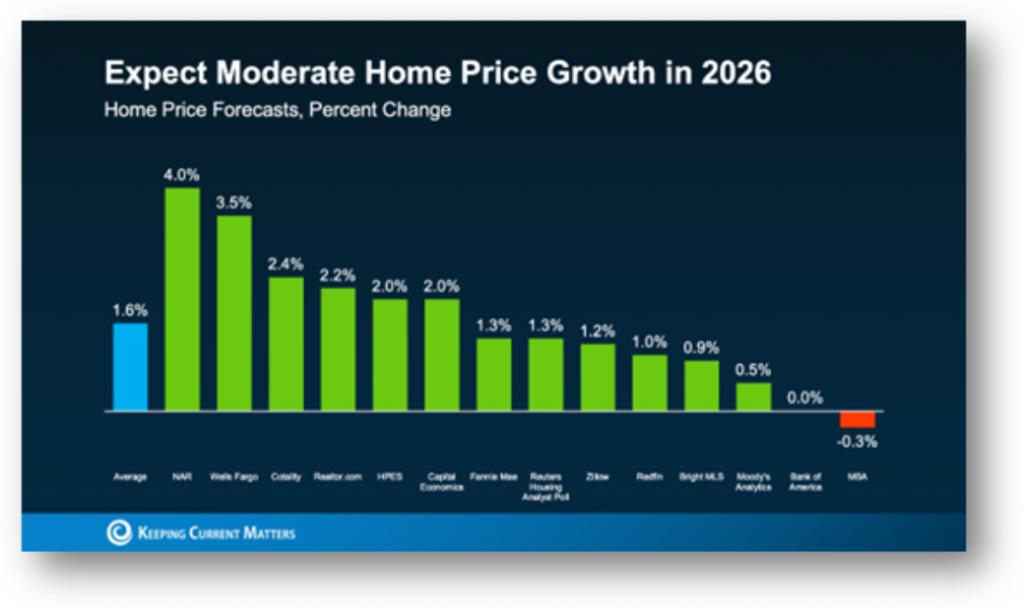
With inventory improving, price pressure has eased. While most experts agree home prices will continue to rise nationally in 2026, the pace is expected to be far more sustainable. On average, prices are forecast to increase by about 1.6% (see graph below). 
That’s important context amid online claims predicting major price drops. While conditions will vary by location – some markets may see modest declines, others stronger growth – the national outlook remains steady. 

“For homebuyers and sellers, the shift signals a more balanced market- one where price growth steadies, rate relief offers breathing room, and negotiating power tilts subtly toward buyers.” 

  • For buyers: Fewer price spikes mean more predictability and easier budgeting. 
  • For sellers: Slower growth helps preserve equity while supporting a healthier market. 

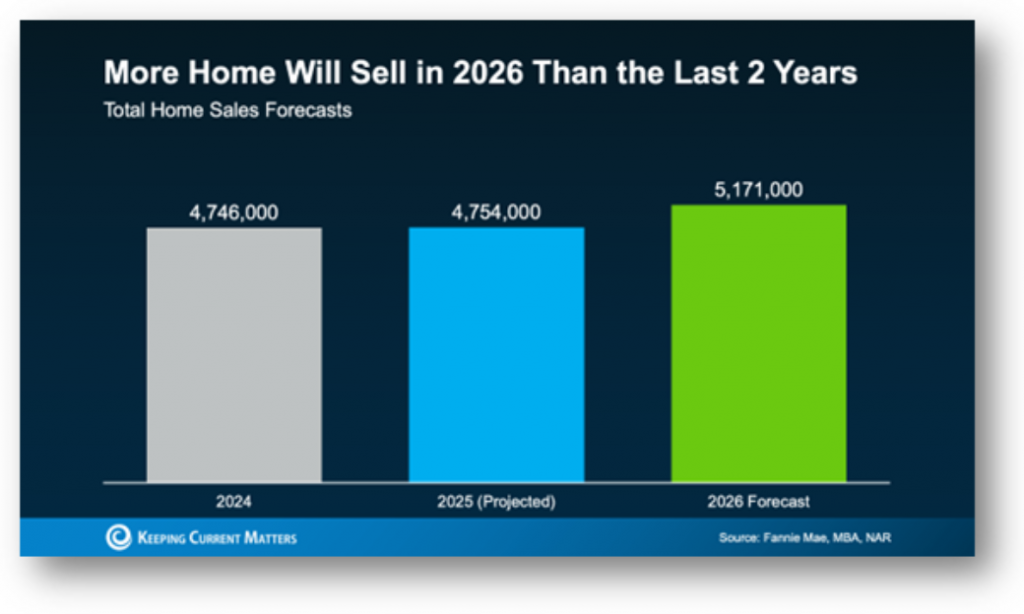
Taken together, these trends point to improved affordability in 2026 – and that’s why experts expect more homes to sell in the year ahead. 

“Buyers are benefiting from more inventory and improved affordability, while sellers are seeing price stability and more consistent demand. Each group should have a bit more breathing room in 2026.” 

Affordability isn’t changing overnight, but steady progress is underway. With mortgage rates stabilizing, inventory improving, and price growth moderating, 2026 is shaping up to be a more balanced, predictable housing market than we’ve seen in years. 

If you’d like to understand how these trends apply to your local market or explore the options available to you, your Employee Homeownership Program is here to help. The program offers guidance, substantial savings, education and support to help you make informed decisions when the time is right. 

Not Sure If You’re Ready to Buy a Home in 2026? Start With These 5 Questions

If you’re thinking about buying a home in the next year, you’re probably weighing a lot at once – your finances, today’s mortgage rates, home prices, and what the economy might do next. It can feel overwhelming, especially when everyone seems to have an opinion about whether now is the right time to buy.

Here’s the good news: while market conditions matter, they’re only part of the picture. Your personal readiness matters just as much — and that’s something you can actually control.

If buying is on your radar for 2026, these five questions can help you decide whether you’re truly ready – and what steps to take next. 

Buying a home is a long-term commitment, so having a steady income is an important starting point. That doesn’t mean your job has to be perfect – but knowing your paycheck is reliable can give you confidence as you plan. 

If you’re unsure how your income translates into a comfortable payment range, this is a good place to pause and get guidance before moving forward. 

Many buyers are surprised to learn there’s a difference between what a lender may approve and what actually fits their budget. 

Understanding affordability means looking at: 

  • Monthly payment comfort 
  • Existing debts 
  • Other financial goals you want to protect 

This is where one-on-one planning can be especially helpful – walking through numbers before you ever talk to a lender or start house hunting. 

Your credit score plays a major role in your interest rate and overall loan costs. Even small improvements can make a meaningful difference over time. If your credit isn’t quite where you want it to be yet, that doesn’t mean buying is off the table – it may simply mean taking a few smart steps now so you’re in a better position later this year. 

Buying a home involves more than a down payment. Closing costs, moving expenses, and future maintenance all factor into the decision. 

According to the National Association of Realtors (NAR), staying in a home for several years is often key to making those upfront costs worthwhile. If you’re planning to put down roots, buying may make sense – but it’s important to look at the full financial picture first. 

Before selecting a real estate agent or lender, it can be helpful to talk with someone whose role is simply to help you plan – not sell. 

Through your Employee Homeownership Program through Advantage Home Plus, you have access to: 

  • One-on-one coaching and planning conversations 
  • Credit review and improvement guidance 
  • Savings on closing costs when you’re ready to move forward 

Having this kind of support early can help you avoid surprises, make confident decisions, and feel prepared before taking the next step. 

Being ready to buy a home isn’t about timing the market perfectly – it’s about understanding your finances, your goals, and your options.  

If buying a home in 2026 is something you’re seriously considering, having a conversation with your Employee Homeownership Program through Advantage Home Plus can help you get clarity and build a plan – before choosing an agent, applying for a loan, or making an offer. 

SupportSquad@AdvantageHomePlus.com | (800) 511-2197 

A Fresh Start: Your 2026 Financial Wellness Plan 

Start 2026 with clarity. This simple financial check-in guide helps you assess your goals and build confidence with support from Advantage Home Plus.
A simple financial check-in can provide clarity and reduce stress, helping you start 2026 with confidence in your money goals.

The start of a new year brings a natural moment to pause and reflect. While many set rigid financial resolutions, a more effective and less stressful approach is a simple financial check-in. This isn’t a complete overhaul; it’s about gaining clarity. Think of it as taking a compassionate look at your financial landscape to understand where you are, which helps you decide where you want to go with confidence. 


Strict budgets and aggressive debt paydown plan often fail because they feel like punishment. A financial check-in, however, is a practice in awareness. It reduces anxiety by replacing uncertainty with a clear picture. This process helps you identify what’s working, spot potential obstacles early, and align your daily habits with your long-term stability, whether you’re saving for a family vacation, managing student loans, or dreaming of a home. 


You can complete this in under an hour. The goal is insight, not exhaustion. 

  1. Gather Your Numbers: Collect your most recent bank statements, credit card bills, loan statements, and pay stubs. Don’t judge, just gather. This gives you the real data to work with. 
  1. Review Your Three Key Health Indicators: 
    •  Cash Flow: Simply compare your monthly income to your monthly expenses. Is there a comfortable gap?
    • Credit Health: Glance at your credit score via a free service. Your score is a snapshot; your full report is the story. Look for any errors. 
    • Debt Overview: List your debts and their monthly payments. Calculate your total monthly debt obligation. 
  1. Reflect on Your Goals: Ask yourself one question: “Do my current finances support where I want to be in one year?” This could relate to building an emergency fund, saving a down payment, or simply feeling less strained at the end of each month. 

This check-in directly supports goals like homeownership. Lenders look at your full financial profile, credit score, debt-to-income (DTI) ratio, and savings. Your gentle review naturally illuminates these exact areas. For example, understanding your DTI ratio now shows you how a future mortgage payment might fit. Seeing your savings growth can motivate a specific down payment plan. You’re not applying for a loan today; you’re building the foundational knowledge that makes that future step feels achievable. 


Interpreting what your numbers mean for your unique life and goals is where personalized guidance helps. The financial wellness benefit offered by your employer provides access to this exact support. A trusted partner like Advantage Home Plus offers free, one-on-one financial fitness consultations. It’s a chance to discuss your check-in findings with an expert who can help you create a tailored, realistic plan without any judgment or sales pressure. 

Taking this first step in 2026 empowers you to move from feeling uncertain about money to feeling strategically in control. The path to major milestones begins with understanding your starting point. 


How do Presidential Elections Impact the Housing Market

How do Presidential Elections Impact the Housing Market

Schedule a Time to Talk


The information contained, and the opinions expressed, in this article are not intended to be construed as investment advice. Advantage Home Plus does not guarantee or warrant the accuracy or completeness of the information or opinions contained herein. Nothing herein should be construed as investment advice. You should always conduct your own research and due diligence and obtain professional advice before making any investment decision. 

What’s Next for Home Prices and Mortgage Rates?

What’s Next for Home Prices and Mortgage Rates?

If you’re thinking of making a move this year, there are two housing market factors that are probably on your mind: home prices and mortgage rates. You’re wondering what’s going to happen next. And if it’s worth it to move now, or better to wait it out. The only thing you can really do is make the best decision you can based on the latest information available. So, here’s what experts are saying about both prices and rates.

1. What’s Next for Home Prices?

One reliable place you can turn to for information on home price forecasts is the Home Price Expectations Survey from Fannie Mae – a survey of over one hundred economists, real estate experts, and investment and market strategists.

According to the most recent release, experts are projecting home prices will continue to rise at least through 2028 (see the graph below):

While the percent of appreciation varies year-to-year, this survey says we’ll see prices rise (not fall) for at least the next 5 years, and at a much more normal pace.

What does that mean for your move? If you buy now, your home will likely grow in value and you should gain equity in the years ahead. But, based on these forecasts, if you wait and prices continue to climb, the price of a home will only be higher later on. 

2. When Will Mortgage Rates Come Down?

This is the million-dollar question in the industry. And there’s no easy way to answer it. That’s because there are a number of factors that are contributing to the volatile mortgage rate environment we’re in. Odeta Kushi, Deputy Chief Economist at First American, explains:

“Every month brings a new set of inflation and labor data that can influence the direction of mortgage rates. Ongoing inflation deceleration, a slowing economy and even geopolitical uncertainty can contribute to lower mortgage rates. On the other hand, data that signals upside risk to inflation may result in higher rates.”

What happens next will depend on where each of those factors goes from here. Experts are optimistic rates should still come down later this year, but acknowledge changing economic indicators will continue to have an impact. As a CNET article says:

“Though mortgage rates could still go down later in the year, housing market predictions change regularly in response to economic data, geopolitical events and more.”

So, if you’re ready, willing, and able to afford a home right now, partner with a trusted real estate advisor to weigh your options and decide what’s right for you. 

Bottom Line

Let’s connect to make sure you have the latest information available on home prices and mortgage rate expectations. Together we’ll go over what the experts are saying so you can make an informed decision on your move.

The information contained, and the opinions expressed, in this article are not intended to be construed as investment advice. Advantage Home Plus does not guarantee or warrant the accuracy or completeness of the information or opinions contained herein. Nothing herein should be construed as investment advice. You should always conduct your own research and due diligence and obtain professional advice before making any investment decision.